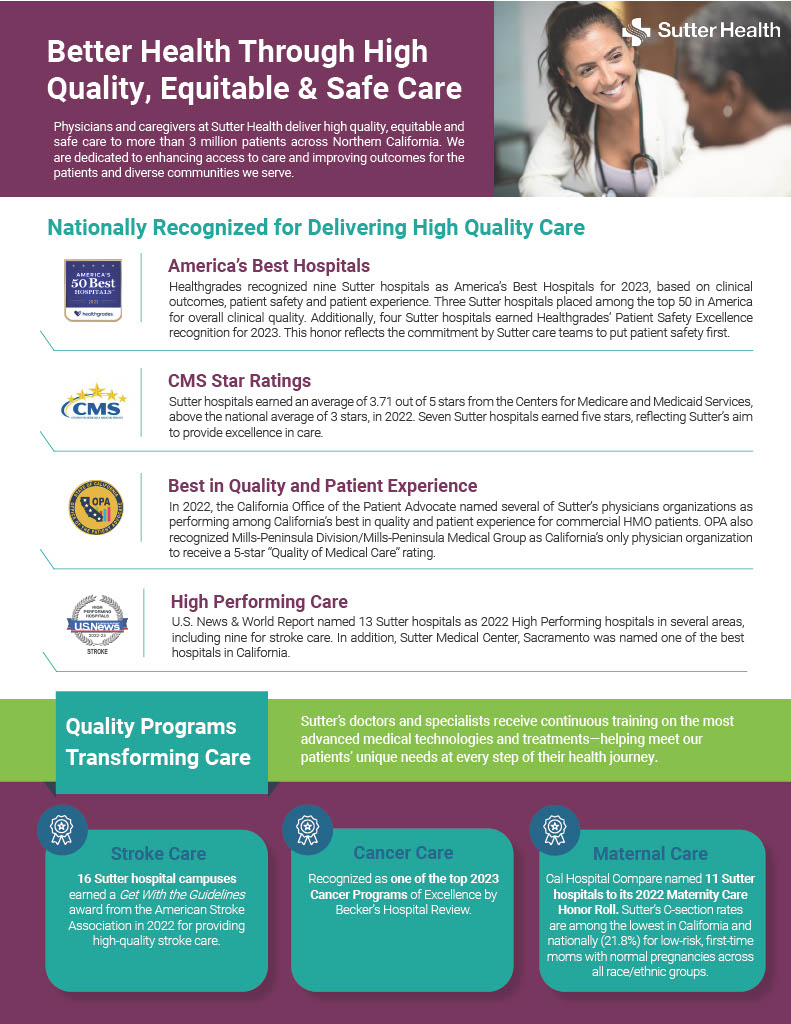
Julius Caesar said, “Experience is the teacher of all things.” And some of those lessons come courtesy of healthcare. Whether you receive treatment for a bee sting or you undergo brachytherapy, it matters how your care is delivered. It can also shape your perspective about healthcare in the future. For Patient Experience Week, April 23-29, Vitals editors look at how high-quality outcomes in two areas are the cornerstone to positive patient experiences.
Cancer Care

Cancer death rates in the U.S. dropped by more than 30% since 1991, according to a recent study by the American Cancer Society. Researchers state the decline is partly due to advances in treatment and early detection — some of the most important attributes of reputable cancer treatment programs. Sutter Health’s exemplary cancer care was recently recognized by Becker’s Hospital Review in its national top 2023 Cancer Programs of Excellence, including those within Sutter’s integrated system.
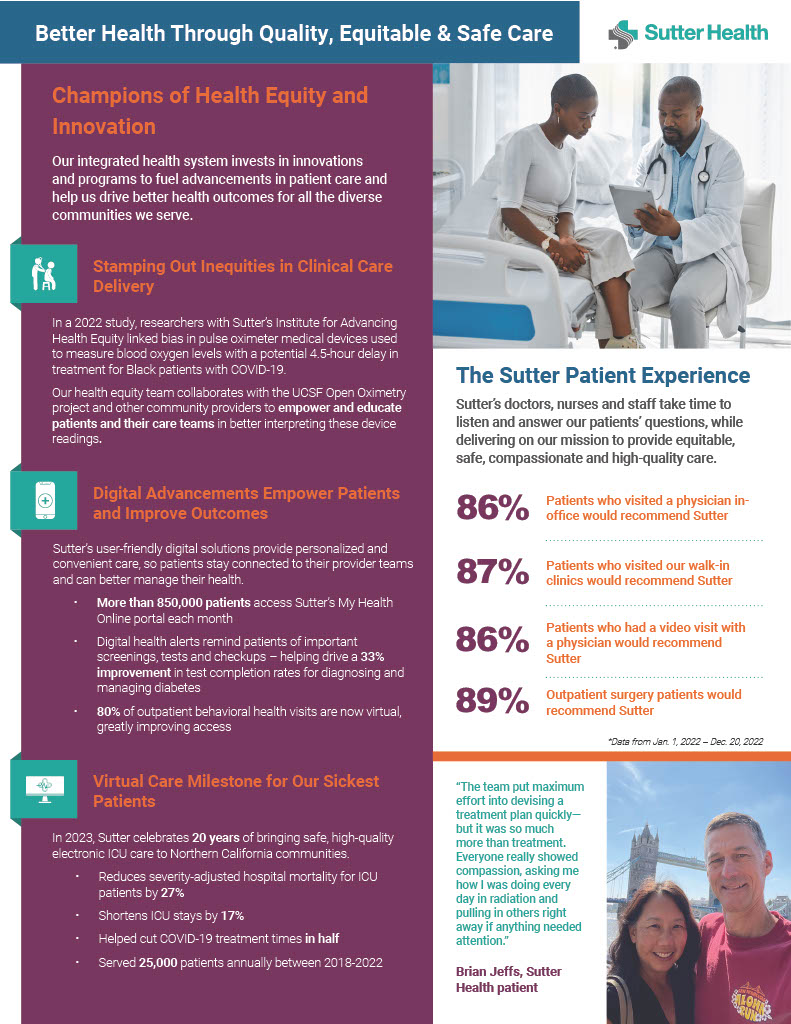
Oakland, Calif., resident Brian Jeffs knows firsthand about cancer care via Sutter’s Alta Bates Summit Comprehensive Cancer Center in Berkeley. During a routine colonoscopy, a doctor found a stage 3 colorectal cancer. Jeffs began radiation in February 2021, followed by surgery in May and chemotherapy in July. According to Jeffs, daily radiation sessions set the tone for compassionate and coordinated care that continued throughout his treatment. Read more of his story.
Stroke Care
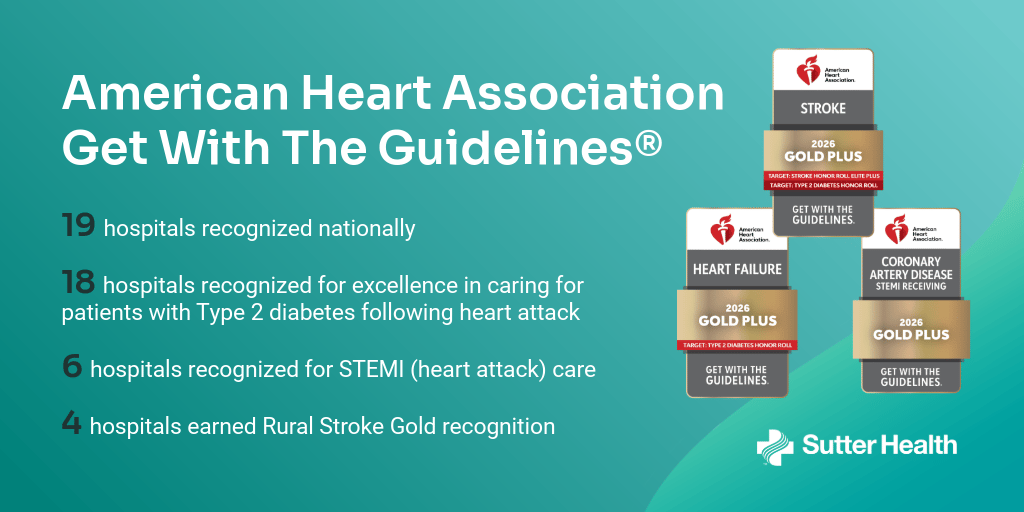
Research shows how stroke dangers continue to evolve — the most recent example indicating that sleep patterns may provide insight into one’s risk. High-level stroke care is even more important given these latest findings, hence the American Stroke Association’s ongoing commitment to recognize hospitals for their approaches. Sixteen hospitals within Sutter’s not-for-profit system recently received recognition from ASA’s Get With The Guidelines® program.
Martin Hyland understands the value of a comprehensive stroke program. The 66-year-old San Franciscan had a basilar artery occlusion, one of the most disabling and deadly types of strokes. He was rushed to Sutter’s California Pacific Medical Center and underwent a thrombectomy. It is a less invasive brain surgery that can remove deadly clots in the brain which intravenous clot-busting drugs alone may not help dissolve. Read more about his experience and learn how care teams offered their support and expertise during a critical time in his life.
Here is an infographic that explains how high-quality, equitable, safe healthcare leads to better health outcomes: