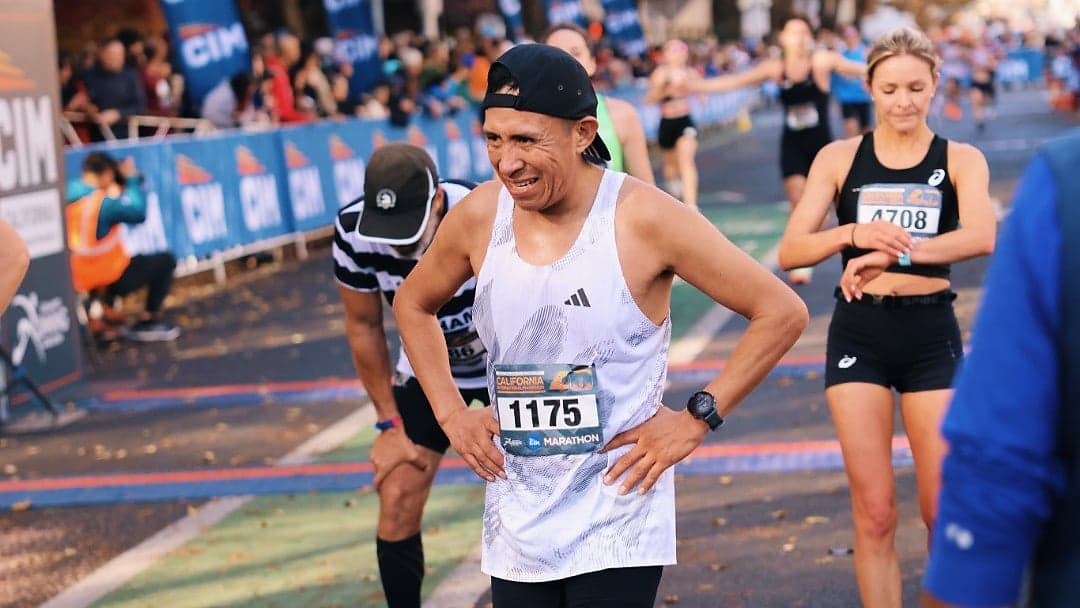
For many, the idea of running 13.1 or 26.2 miles can feel daunting. But with the right preparation, patience and mindset, the challenge becomes not only achievable but deeply rewarding. Few understand this balance of body and endurance better than Myriah Surman, a lead physical therapist at Sutter Health and seasoned marathoner who first fell in love with running during her time in physical therapy school.
“I used to dread running the mile in school,” she said, laughing. “But once I started training with friends in college, I realized running could be something more. It became a lifestyle.”
Over the years, Surman has completed multiple half and full marathons, blending her medical knowledge with real-world experience on the race course.
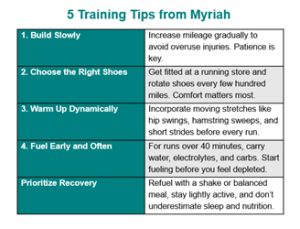
Her first piece of advice: Don’t rush the process.
“One of the biggest mistakes new runners make is increasing mileage too quickly. Gradual progress is key to avoiding injury,” she said.
Proper footwear also plays a major role. A good running store can evaluate your stride and recommend the right shoes, which should be rotated every few hundred miles. Equally important is listening to your body during training. Soreness is normal, but sharp or persistent pain is not. Surman emphasizes dynamic warmups before runs — such as hip swings, hamstring sweeps or short strides — to prime muscles and prevent injuries. Fueling and hydration are also crucial, especially for long runs.
“When I ran my first half marathon, I didn’t bring water or fuel. That was a mistake,” she recalled. “What you take in at mile three will help you at mile six.” For runs longer than 40 minutes, carrying electrolytes and carbohydrates can make all the difference in sustaining energy and avoiding dehydration.
Recovery, Surman noted, begins as soon as the run ends. Her go-to strategy includes a recovery shake, a balanced meal within a couple of hours, and light movement like walking to ease soreness. Sleep and nutrition, she added, are the most underrated recovery tools. Beyond the physical, Surman highlights the mental endurance that running builds.
“Crossing the finish line is about more than the race itself — it’s about every mile of training that got you there,” she said.
For her, each marathon is a celebration of perseverance and community, whether she’s running through Sacramento at the California International Marathon or exploring a new city abroad.
Her message is clear: Marathon training isn’t just for elite athletes. With thoughtful preparation, anyone can discover the physical and mental benefits of running.
“Running really is for everybody,” Surman said. “The starting line is proof of all the work you’ve put in, and the finish line is where you get to celebrate it.”
Sutter Health is the presenting sponsor and official medical team and health partner of the California International Marathon and the San Francisco Half Marathon. For more information on the CIM, visit runsra.org/california-international-marathon. For details about the 2026 San Francisco Half Marathon, including registration, charitable partnerships and sponsorship opportunities, visit sanfranciscohalfmarathon.org.
For more information on health and wellness, visit Sutter Health’s Health Living Blog here.
NOTE: This content is not intended to be a substitute for professional medical advice, diagnosis or treatment. Always seek the advice of your physician or other qualified health provider with any questions you may have regarding a medical condition. Never disregard professional medical advice or delay in seeking it because of something you have read on this website.