The face of medicine is changing. Women now make up nearly 40% of practicing physicians in the United States, up from 26% in 2004 and comprise a majority of U.S. medical school students. At Sutter Health, women are helping shape the future of healthcare through research, specialized care and medical education — making a lasting impact on patients and communities across Northern California.
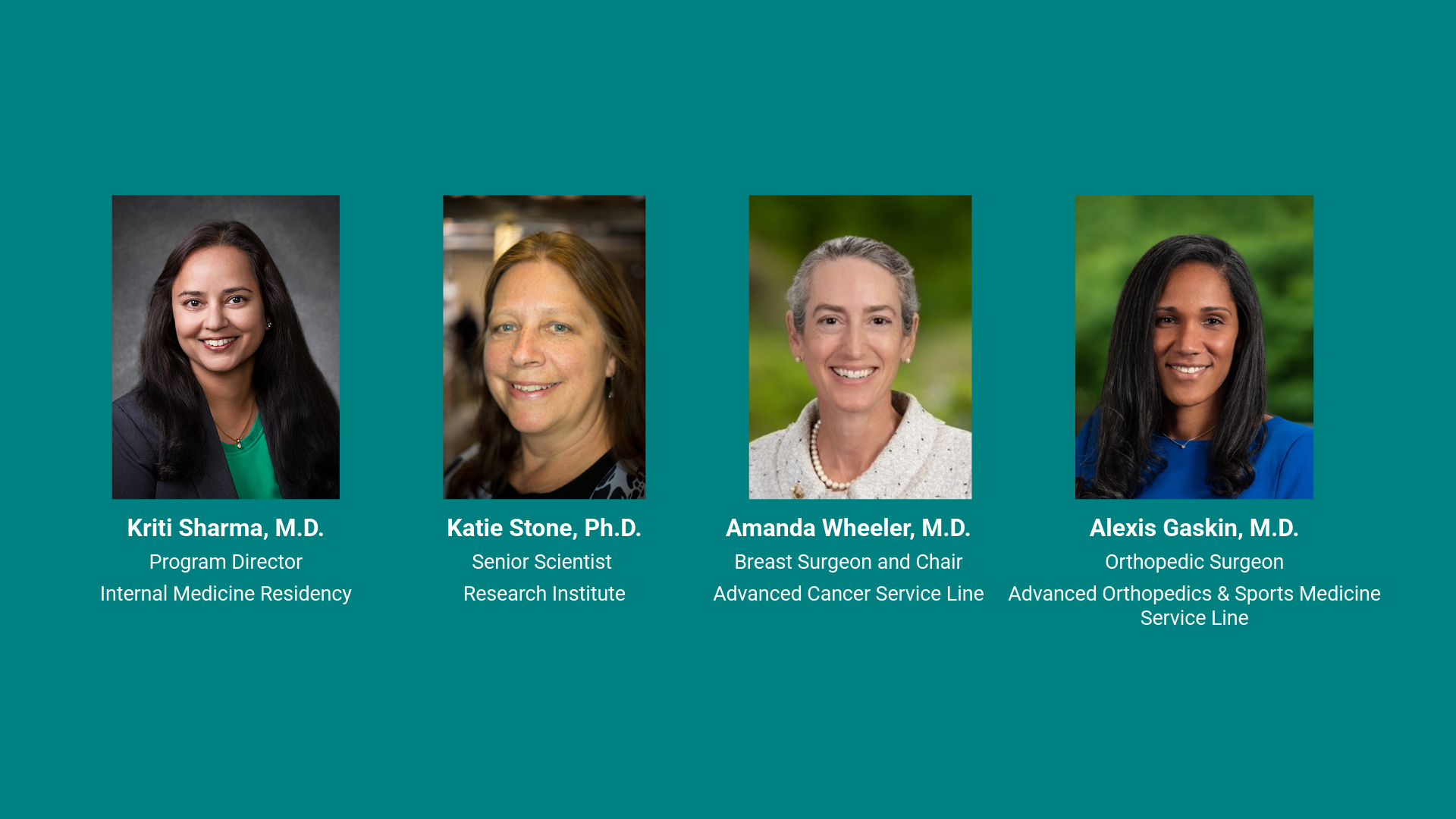
In honor of Women in Medicine Month, we spoke with four leaders about the experiences, mentors and moments that shaped their careers and the advice they would share with the next generation.

Dr. Katie Stone
Dr. Katie Stone, Senior Scientist for the Center for Aging Science, Sutter Health Research Institute
Q: What first drew you to study sleep, and what has kept you curious about the connection between sleep and healthy aging throughout your career?
A: Early in my research career, I studied factors that influence healthy aging, with a particular focus on diet and osteoporosis. On a whim, I explored whether poor sleep quality increased the risk of falls and fractures in older adults, and the results were compelling. They suggested sleep plays a much larger role in health than many realized. That sparked my passion for understanding how sleep and the body’s natural sleep-wake cycle influence aging, chronic disease and overall health. Today, we know sleep is just as important as diet and exercise.
Q: What excites you most about where sleep research is headed—and what it could mean for how we age?
A: It is a very exciting time to be a sleep researcher, in part because of the rapid advances in wearables and in-home devices that can capture not only sleep duration, but timing, regularity, and even more sophisticated measures such as sleep staging and sleep apnea. Furthermore, having spent decades conducting epidemiologic studies to learn how sleep influences brain health and physical health in older adults, I am now focused on developing clinical trials to test whether improving sleep can actually slow the aging process, prevent dementia and cognitive decline, and improve health in older adults.
Dr. Kriti Sharma, Internal Medicine Program Director, Gould Medical Group
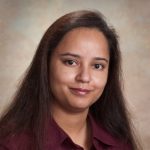
Dr. Kriti Sharma
Q: Looking back on your own path in internal medicine, what advice would you give to women who are just beginning their careers in medicine?
A: I am grateful for the journey from a timid young woman to finding my voice in medicine. To women beginning their careers: believe in yourself, let your work and integrity speak for you, embrace opportunities even when you feel uncertain, learn from every experience, and advocate for yourself and others. As you grow, bring other women with you, because our greatest impact is not only how far we go, but how many others we inspire and help rise along the way.
Q: As a program director, you have the opportunity to train the next generation of physicians. What excites you most about that responsibility and the future of medical education?
A: One of the most rewarding aspects of being a residency Program Director is helping prepare future physicians for what’s ahead. Medicine is evolving through incredible innovation and technology, but our greatest opportunity is to ensure we never lose sight of what makes it uniquely human: connection, compassion, advocacy, and being there for patients beyond a diagnosis or prescription. Knowing these values can live on through the physicians we train is what makes this journey so meaningful to me.
Dr. Amanda Wheeler, Breast Surgeon and Chair, Sutter Health Advanced Cancer Service Line
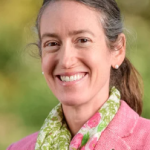
Dr. Amanda Wheeler
Q: How does your experience caring for patients influence the decisions you make as a leader?
A: Patient care remains central to my work and shapes how I lead. Cancer touches nearly all of our lives, whether through our own experience or that of a loved one, and that shared reality gives my work deep purpose. As a surgeon, I understand the urgency, complexity and trust involved in a cancer diagnosis, and I strive to build programs that help achieve the Advanced Cancer Service Line’s core priorities: timely access to care, quality and safety, research and innovation, and excellent outcomes for every patient we serve. In my leadership role, I try to bring Sutter’s values into each decision by asking whether we are making care more connected, equitable, reliable, consistent and easier for patients and care teams. I am inspired by our culture of respect, transparency, accountability, collaboration and doing what is right for patients, and those principles help ensure every strategy remains grounded in the needs of the people and families we serve.
Q: What progress have you seen for women in medicine during your career, and what challenges remain?
A: Early in my training, there were fewer women in senior roles I could look to as examples. Today, I am fortunate to work alongside many talented women physicians, clinicians and leaders whose presence strengthens how we care for patients, innovate and build trust. While challenges remain, including underrepresentation in leadership positions and the need for equitable opportunities, I am proud that Sutter invests in leadership development. That investment reflects the culture we must continue to build, one that supports women physician and clinician leaders, advances patient-centered care and helps the next generation see leadership as both attainable and expected.
Dr. Alexis Gaskin, Orthopedic Surgeon affiliated with Sutter Medical Group
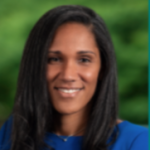
Dr. Alexis Gaskin
Q: Women represent less than 6% of active orthopedic surgeons nationwide. What drew you to orthopedic surgery, and what has your journey in the specialty been like?
A: My exposure to orthopedic surgery began in college, when my mother introduced me to the physicians she worked with in an orthopedic department. They took me under their wing and allowed me to shadow them in clinic and the operating room, giving me an early look at a specialty I quickly came to enjoy. Dr. Hillary Redlin, Dr. Chad MacLachlan and Dr. Letitia Bradford guided me throughout my training. Having both female and male mentors was invaluable. They never cast doubt on my ability to succeed in orthopedics, which allowed me to focus on the path ahead. Throughout it all, I was fortunate to have the unwavering support of my parents.
Q: Who were the women who influenced your path to becoming an orthopedic surgeon, and what hopes do you have for women pursuing medicine today?
A: Mentorship and guidance from Dr. Hillary Redlin and Dr. Letitia Bradford showed me what was possible as a woman in the specialty. My mother, Sedina Gaskin, also played a pivotal role by introducing me to the physicians she worked with and opening the door to a career I may not have otherwise considered. My hope for women pursuing medicine today is that they follow the career paths that genuinely interest them and not let perceptions about a specialty discourage them. If you’re passionate about something, don’t be afraid to go for it.