From Ethiopia to San Francisco, Dr. Gaelen Stanford-Moore is helping patients — and surgeons — see new possibilities for a condition long considered untreatable.
By Jenn Lonzer, Vitals contributor
On the first day of clinic in Ethiopia, patients lined up outside the hospital hoping to see Dr. Gaelen Stanford-Moore.
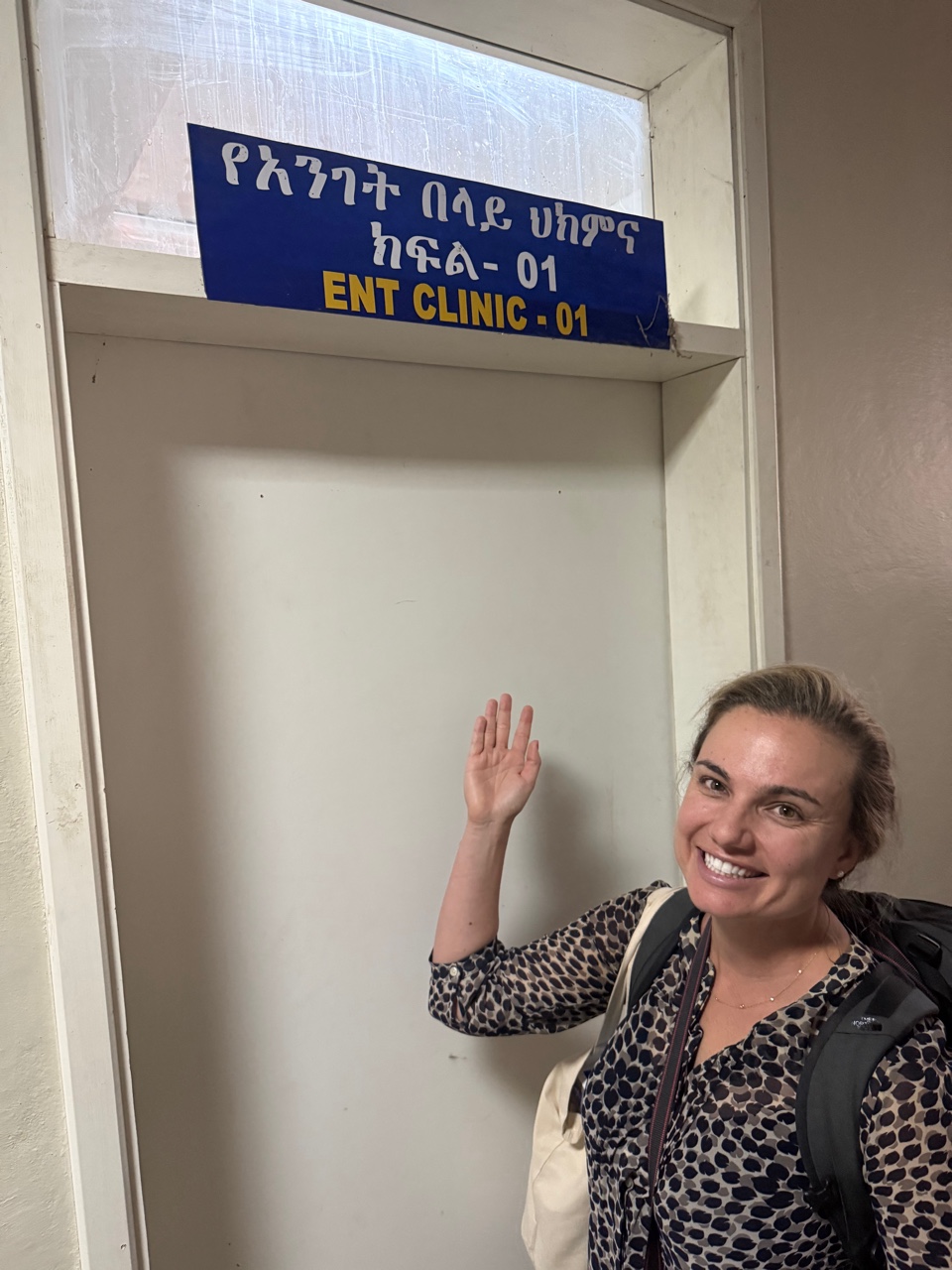
Dr. Gaelen Stanford-Moore
A facial plastic and reconstructive surgeon with Sutter West Bay Medical Group, Dr. Stanford-Moore had traveled there as part of a surgical education program focused on helping local surgeons expand their expertise in facial reconstruction. Over the course of a week, she would evaluate 45 patients with longstanding facial injuries and select a handful whose cases could become opportunities to teach.
The challenge wasn’t finding patients who needed care.
It was deciding which patients would have the greatest educational impact.
For Dr. Stanford-Moore, the purpose of the trip wasn’t simply to perform surgery. It was to teach local surgeons skills they could continue using long after she returned home.
“We need to train specialist surgeons in their own country, on their own equipment, to help their patients,” she says.
That philosophy shapes every aspect of the non-profit group that helped support the trip, Partnerships for Global Surgery. Rather than arriving with suitcases full of specialized equipment, visiting surgeons teach using the tools already available in local hospitals. The goal is to build sustainable expertise.
Teaching What’s Possible
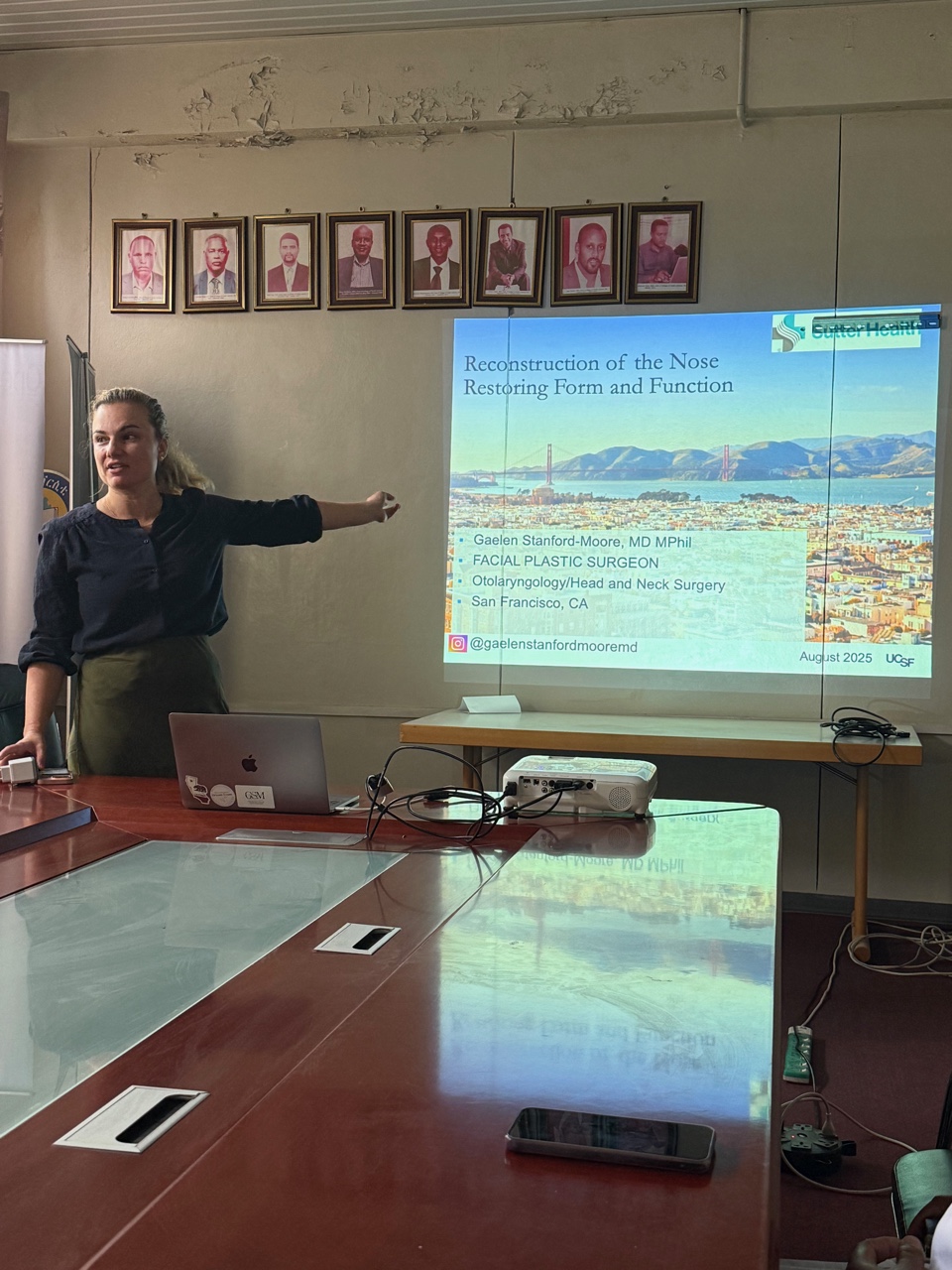
Dr. Stanford-Moore teaches specialty skills to local surgeons through her work with the international organization Partnerships for Global Surgery.
Patients traveled from across the region to be evaluated. Many were living with longstanding facial trauma caused by motor vehicle accidents or other injuries that had never been fully repaired.
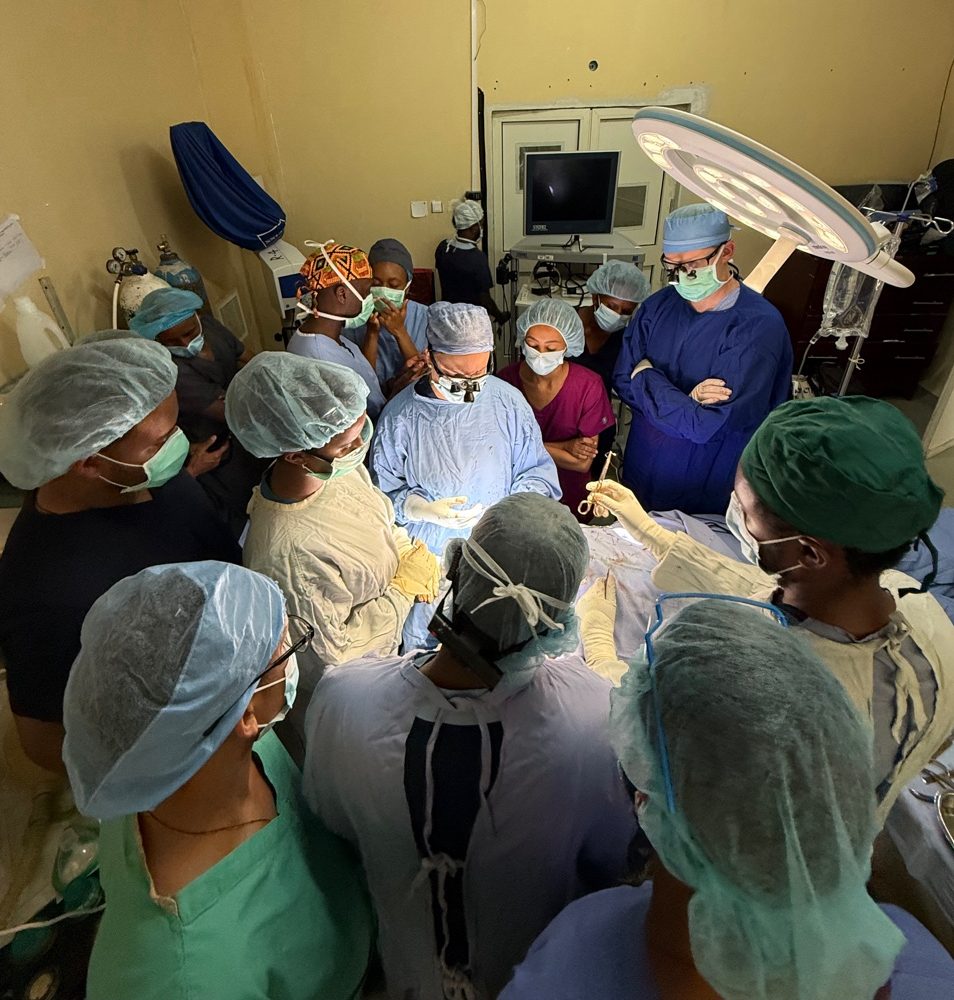
The operating environment looked very different from what many U.S. surgeons are accustomed to. Electricity outages were common. The endoscopic cameras had been donated, and couldn’t be repaired when they became old or damaged. Headlamps were dimly lit. In one operating room, the suction machine repeatedly overheated, forcing the team to pause every few minutes during surgery to give the machine a break.
Yet what stood out most to Dr. Stanford-Moore wasn’t what the surgeons lacked. It was their determination to learn.
“They had read the textbooks and really wanted to know how to do these surgeries,” she says. “They had just never seen them performed before.”
Much of the week focused on nasal reconstruction procedures designed to restore both appearance and function. Patients who had suffered significant facial injuries often struggled to breathe properly because of damage to the structure of the nose.
Using the instruments available locally, Dr. Stanford-Moore demonstrated techniques the surgeons could continue performing after she left.
The Patients No One Was Tracking
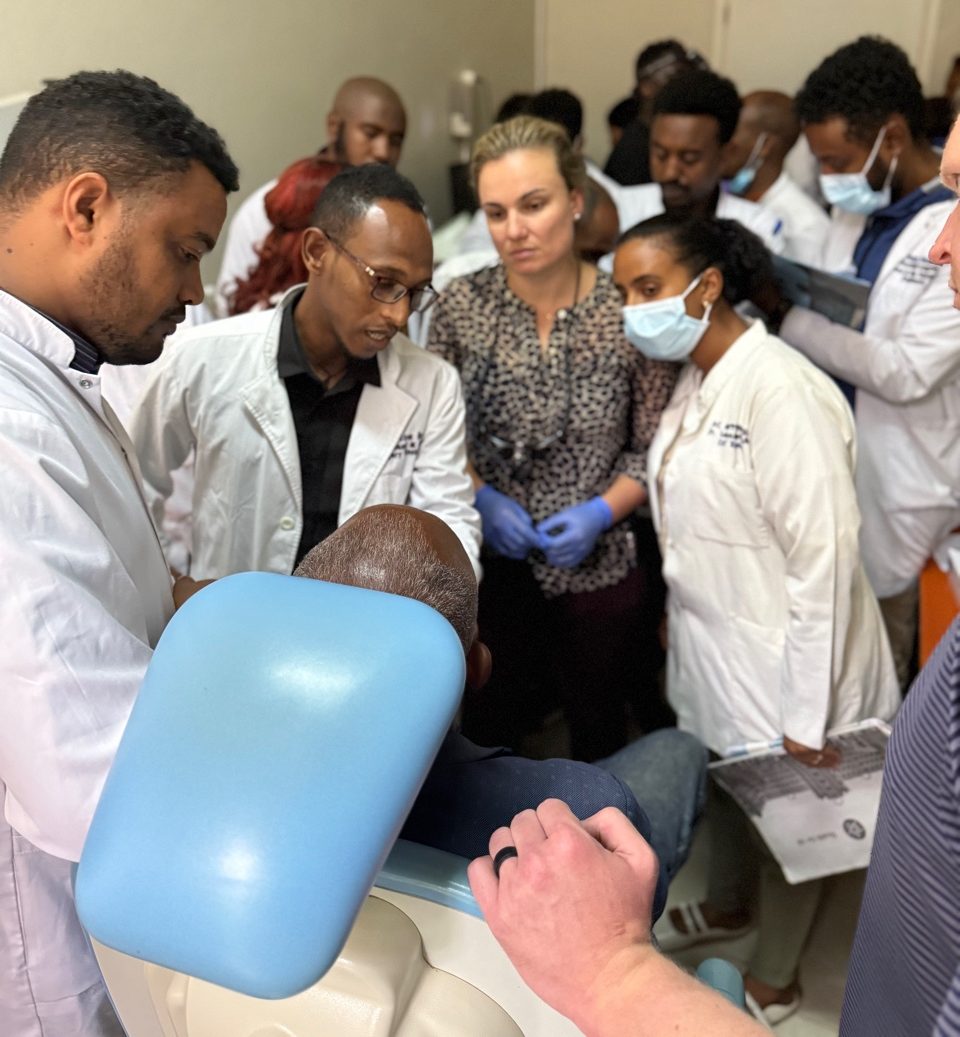
Dr. Stanford-Moore participates in a surgical education program focused on helping local surgeons expand their expertise in facial reconstruction.
There was one group of patients Dr. Stanford-Moore hadn’t seen.
Patients with facial paralysis.
When she asked why, the answer surprised her.
“They don’t even enter those patients into the medical registry,” Dr. Stanford-Moore says. “They just tell them there’s nothing they can do.”
Once local physicians understood that treatment options existed, they began identifying patients they previously assumed could not be helped.
One patient had suffered a skull fracture years earlier that damaged the nerve controlling one side of his face. Since the injury, he had been unable to fully close one eye, leaving it chronically irritated and vulnerable to injury.
On her final day, Dr. Stanford-Moore performed an eyelid procedure designed to improve eye closure and protect his eye.
But the surgery itself wasn’t the most important part. The lesson was.
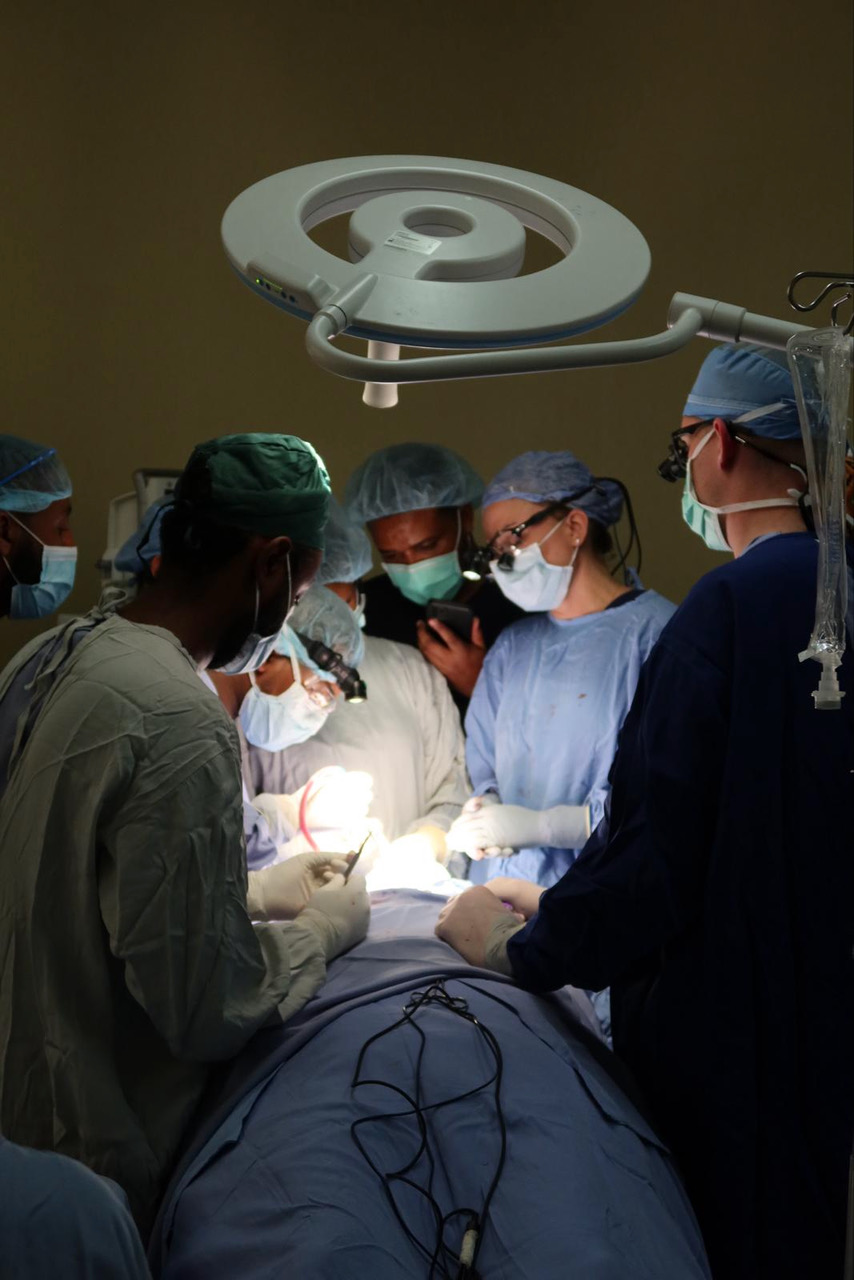
Dr. Stanford-Moore oversees a surgical procedure in Ethiopia.
She used the case to teach local surgeons how facial paralysis affects patients and what treatment options might be possible, even in resource-limited settings.
The experience planted a seed.
Changing the Conversation
By the time she returned several months later, conversations had already begun about identifying more facial paralysis patients and expanding local expertise in their care.
For Dr. Stanford-Moore, that progress was especially meaningful because facial paralysis is one of the primary focuses of her clinical practice. Recently, she established Sutter Health’s first multidisciplinary Facial Nerve Center, bringing together specialized expertise in facial rehabilitation, reconstructive surgery, ophthalmology, neurology and other disciplines to care for patients living with facial paralysis caused by Bell’s palsy, cancer, trauma, and other conditions.
The belief that “nothing could be done” was one she recognized immediately.
For years, patients with facial paralysis were told little could be done to improve their condition — no matter where they lived. Today, advances in treatment can help restore function, protect vision, and improve quality of life.
“We’re trying to get the word out that there are things we can do for these patients,” she says.
Before leaving Ethiopia, Dr. Stanford-Moore gave a lecture on facial paralysis and the treatment approaches now available to patients. Months later, the conversations continue. Surgeons send questions. Cases are discussed. New patients are being identified.
It’s a small change, but an important one. Because sometimes improving care doesn’t begin with a new piece of equipment or a complex operation. Sometimes it begins when a patient who was once overlooked is finally seen as someone who can be helped.

Sutter’s Complex Head and Neck Surgery Program team at Sutter’s CPMC Pacific Heights Outpatient Center (2351 Clay Street, Suite 501, San Francisco | O:(415) 600-3898). From left to right: Drs. Kathy Yung, Patrick Carpenter, Gaelen Stanford-Moore, William Ryan and Kambridge Hribar