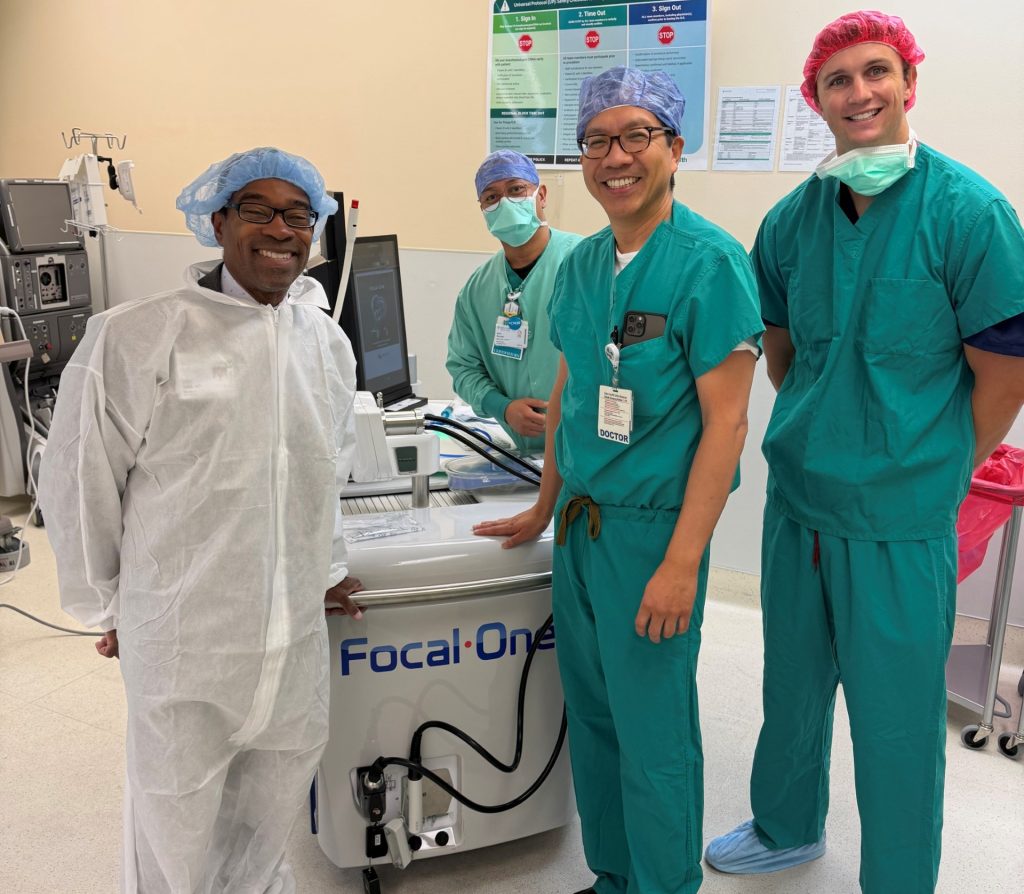
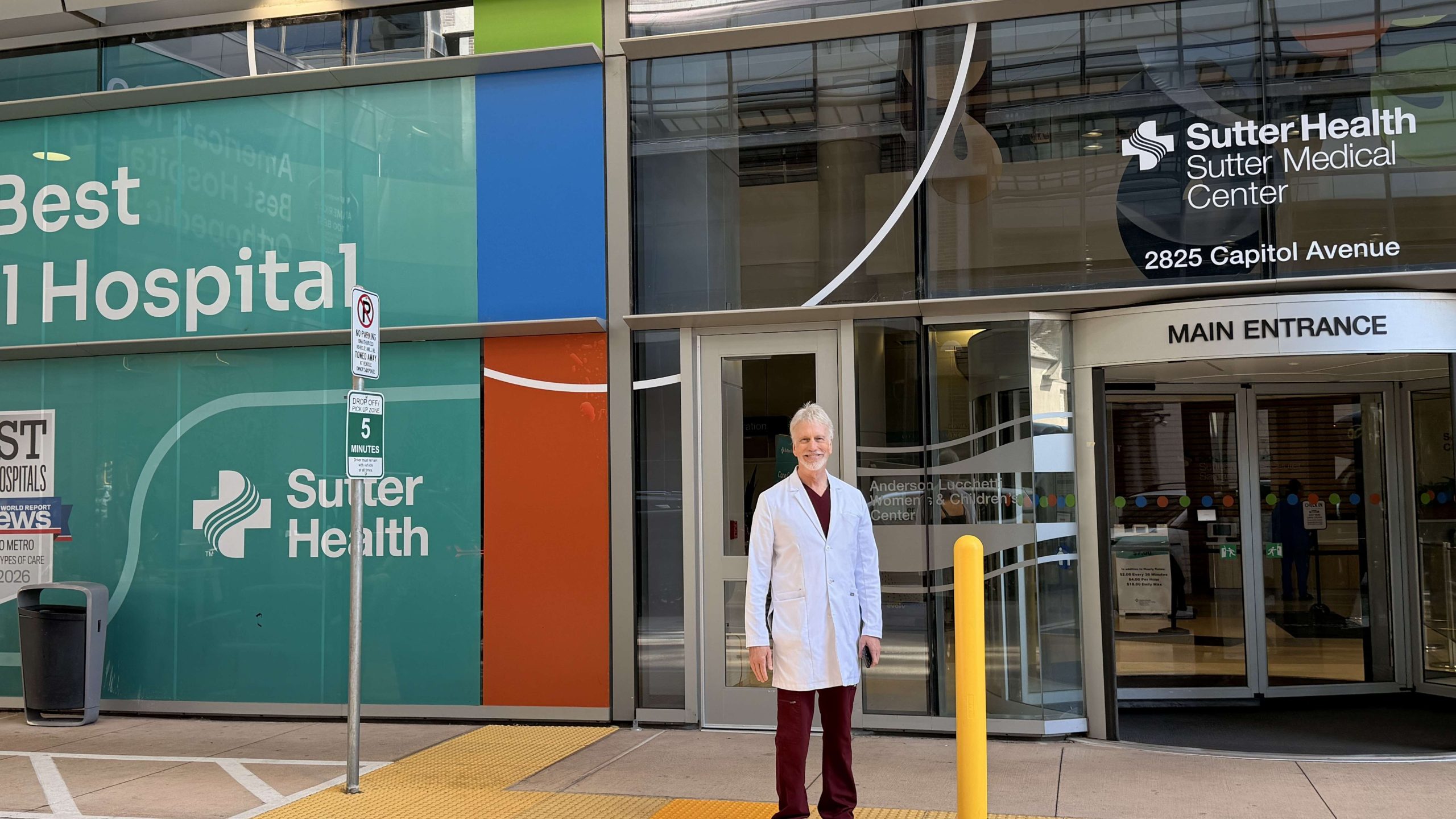
(shown above, Pathfinder 2 investigator Dr. Charles McDonnell outside Sutter Medical Center in Sacramento)
By Karin Fleming & Nicole Young, Vitals Contributors
An FDA advisory panel endorsed GRAIL’s Galleri® multi-cancer early detection blood test, after reviewing findings including a newly published study involving Sutter physicians which shows how the test found cancers that often lack routine screening.
Most recommended screenings look for one cancer type at a time. Many cancers have no routine screening option at all. On September 23, an FDA advisory panel evaluated GRAIL’s blood test designed to screen for more than 50 cancers. Results from the PATHFINDER 2 study are providing new evidence about how this test may perform in everyday clinical care and what questions remain.
Sutter Health was the PATHFINDER 2 study’s second-highest enrolling site nationwide, helping connect thousands of adults from across the Sutter System with research that could shape the future of cancer detection. Sutter physician-investigators Charles McDonnell, M.D. and Natalia Colocci, M.D., PhD led the PATHFINDER 2 study at Sutter. McDonnell co-authored findings recently published in Nature Medicine.

Dr. Charles McDonnell
“These results show the progress we’re making in identifying new ways to detect cancer earlier,” commented Dr. McDonnell, a radiologist with Sutter Medical Group and a PATHFINDER 2 investigator who consults for GRAIL. “PATHFINDER 2 represents the next step in exploring whether multi-cancer early detection blood tests could become part of everyday care, helping doctors find more cancers at earlier, treatable stages.”
The study offers important evidence about the test’s performance and safety, while questions remain about which patients are most likely to benefit and how multi-cancer early detection testing may affect outcomes, follow-up care, cost, and access.

Dr. Amanda Wheeler
“The results mark an important turning point in cancer detection and highlight Sutter’s role as a trusted research partner, contributing not just study participants, but also leadership and expertise to help translate and scale innovation into patient care,” said Amanda Wheeler, M.D., a breast surgical oncologist and chair of Sutter’s Cancer Service Line.
Finding More Cancers Through One Blood Draw
PATHFINDER 2 evaluated Galleri®, an investigational multi-cancer early detection test developed by GRAIL. The test analyzes small pieces of DNA circulating in the blood for patterns that may signal cancer. When it detects a signal, the test also predicts where in the body the cancer may be located, helping clinicians determine appropriate follow-up testing.
The study enrolled 35,878 adults ages 50 and older across the United States and Canada. When the blood test was added to recommended breast, cervical, colorectal, and lung cancer screenings, the number of cancers detected through screening increased 6.5-fold compared with recommended screenings alone.
Nearly half of the cancers found by the blood test were diagnosed at stages 1 or 2, and nearly three-quarters were diagnosed by stage 3. Importantly, 70% of cancers detected were those without nationally recommended screening options, including cancers that can be difficult to find before symptoms develop.
Helping Doctors Follow the Signal
Among 287 study participants who received a cancer-signal result, 173 were ultimately diagnosed with cancer. The test correctly predicted the cancer’s location in the body 91.3% of the time, which could help doctors focus on diagnostic testing. The study reported a false-positive rate of 0.36%. Among more than 35,000 participants evaluated for safety, 0.6% underwent an invasive procedure following a positive result, and most of those procedures were nonsurgical.
The test is intended to complement, not replace, recommended screenings such as mammograms, colonoscopies, and lung cancer screening. Researchers continue to study which patients are most likely to benefit and how multi-cancer early detection testing may affect outcomes, follow-up care, cost, and access.
Research Powered by Patients and Clinicians
Sutter’s position as the nation’s second-highest enrolling site brought community-based patients and clinicians into one of North America’s largest interventional studies of multi-cancer early detection.

Dr. Natalia Colocci
“As the second-highest enrolling site for PATHFINDER 2, Sutter places its clinicians and patients at the forefront of research that could reshape how cancer is detected,” said Dr. Colocci, medical oncology section chief for Sutter’s Cancer Service Line and a PATHFINDER 2 investigator.
Sutter is also participating in the REACH Study that is evaluating the real-world clinical impact, safety, and performance of GRAIL’s Galleri multi-cancer early detection blood test in the Medicare population, according to Colocci.
This work reflects Sutter’s approach to clinically distinct care: expanding access to innovative research while rigorously evaluating how new discoveries can be translated safely and responsibly into better care for patients.
Learn more about research and clinical trials at Sutter Health.