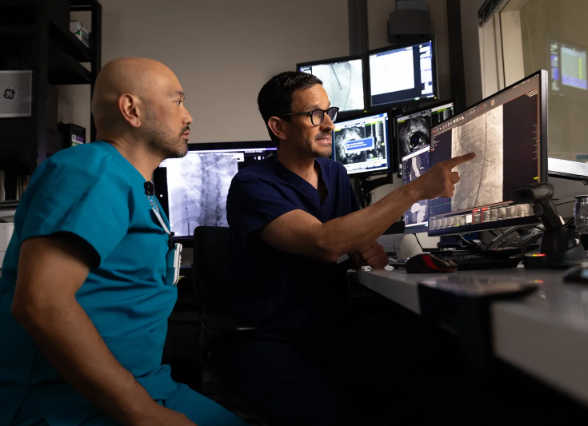
When a Sutter radiologist opened a routine scan earlier this winter, something uncommon happened. Before he even began reviewing the image, an AI‑powered alert surfaced a subtle critical finding. The suspicion was confirmed upon further clinical analysis by the doctor. Moments later, a care team was already coordinating next steps.
For Sutter Health these moments represent the future of care, happening at a speed and scale rarely seen. Radiologists across the Sutter system are now empowered with real‑time intelligence that helps improve quality and accelerate diagnoses thanks to Sutter’s systemwide use of Aidoc’s enterprise clinical AI platform, aiOS™.
Enterprise AI Pushes Beyond Point-in-Time Solutions
Unlike single‑use AI tools scattered across departments, Sutter is scaling clinical AI across its system, benefiting a greater number of patients and providers. Aidoc’s AI operating system serves as a unified, intelligent clinical layer integrating both imaging and EHR data in real time.
The system seamlessly is built into existing workflows so clinicians don’t have to navigate new software or change their established practices. Radiologists are the first within Sutter to have access to aiOS™, given medical imaging often plays a role in numerous care scenarios. Neurologists and neurovascular surgeons will be the next physicians that will use the technology for stroke care.
The platform provides real‑time analysis of imaging, flags potential acute findings, compares to prior electronic health record reports and surfaces the insights directly within existing workflows.
Behind the scenes, Aidoc’s care coordination tools mobilize specialists in real time, accelerating communication and supporting faster treatment decisions.
Speed and Scale Help Fuel Operational, Clinical Excellence
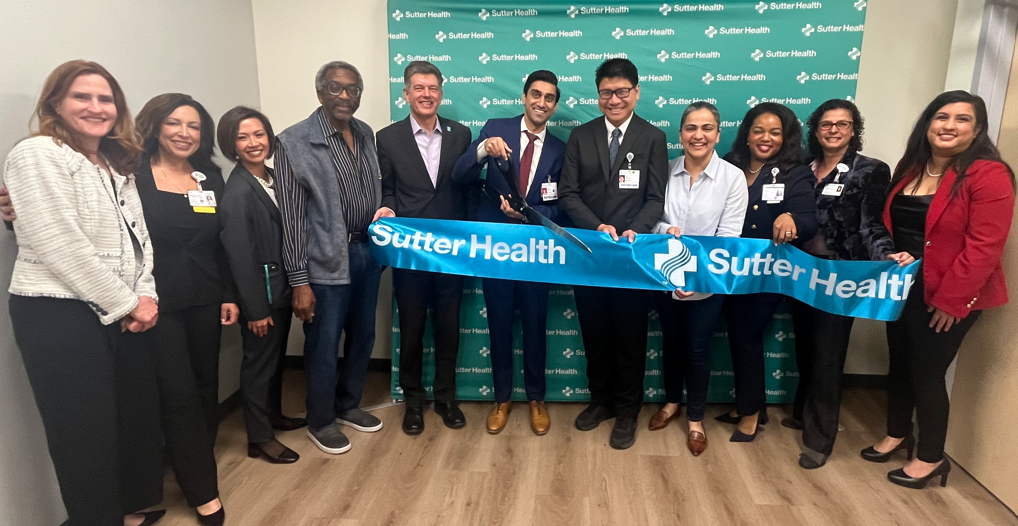
What sets Sutter apart is not only what it implemented, but how quickly it did so — especially impressive given it serves approximately 3.6 million people across its system.
With mature clinical, technical and governance infrastructure already in place, Sutter deployed Aidoc’s platform across hospitals and care centers in just weeks — without disrupting care.
Dr. Ashley Beecy, Sutter’s chief AI officer, said the partnership with Aidoc reflects Sutter’s commitment to proactive care — anticipating patient needs and acting at the right time to make a real difference in people’s lives.
“We’re leading the way in applying AI to deliver faster, smarter and more precise care,” she said. “This approach helps detect serious conditions earlier so patients receive the right treatment at the right time. For physicians, AI is a partner that enhances situational awareness, giving them more capacity for complex decisions and direct patient care.”
Clinicians Trust AI as It’s Put to the Test
Before going live, Sutter evaluated more than 10,000 patient cases, benchmarking Aidoc-supported results against radiologist interpretations. Findings closely aligned, reinforcing clinician confidence well before the first live alert.
Early adopters have already identified multiple “good catch” cases for conditions including brain aneurysms, pulmonary embolisms, brain bleeds, cervical spine fractures and blocked blood vessels.
“The pre go-live validation exercise gave us confidence that the AI doc algorithms perform well not just in training data, or even at other health systems, but in real-world Sutter workflows with Sutter patients and with Sutter radiologists,” said Dr. Jason Wiesner, chair of Sutter Health’s Imaging Service Line. “When our radiologists see real examples where the technology helps surface potential critical findings quickly, it shifts AI from an abstract concept to a tangible clinical partner.”
In 2026, Aidoc’s aiOS™ is projected to help: Analyze 740,000 patient images Flag 17,000 cases for potential acute needs
Modeling Responsible, Scalable AI Innovation
Sutter and Aidoc will continue exploring opportunities together to advance care. Together, the organizations plan to co-develop new options, advance peer-reviewed research and establish specialized centers across key service lines. This work will continue to be grounded in shared governance and a clinician-driven approach to support AI as safe, effective and aligned to real-world needs.
“This partnership with Sutter Health demonstrates the real promise of clinical AI when it’s built as an operating system, not a collection of isolated tools,” said Elad Walach, CEO of Aidoc. “We’ve built our aiOS to serve as a real-time clinical layer across the enterprise, enabling AI to work alongside physicians at scale without disrupting care. Seeing it deployed system-wide, trusted in real-world settings after rigorous evaluation and great results to date, is another example of AI meaningfully improving speed, awareness, and coordination of care while keeping physicians firmly in control.”