For Jude Farhat, the path to medical school was anything but traditional.
Growing up in South Sacramento as the daughter of Syrian immigrants, Farhat faced challenges that could have derailed her dreams. Instead, those experiences strengthened her resilience and determination to pursue medicine and serve communities that often feel overlooked.
“Strict immigration laws kept my father away for five formative years of my childhood, leaving my mom to raise me and my seven siblings by herself,” Farhat recalled. “It was hard for my family to prioritize academic excellence and with limited access to advisors, self-direction was inadequate.”
In high school, Farhat struggled with her mental health and graduated with a 2.4 GPA. Community college became her next step and, ultimately, the foundation for her future success.
“Being first-generation taught me to advocate for myself and proactively find helpful resources,” she said. “Participating in programs designed for educationally and socioeconomically disadvantage students provided guidance that catered to my specific needs.”
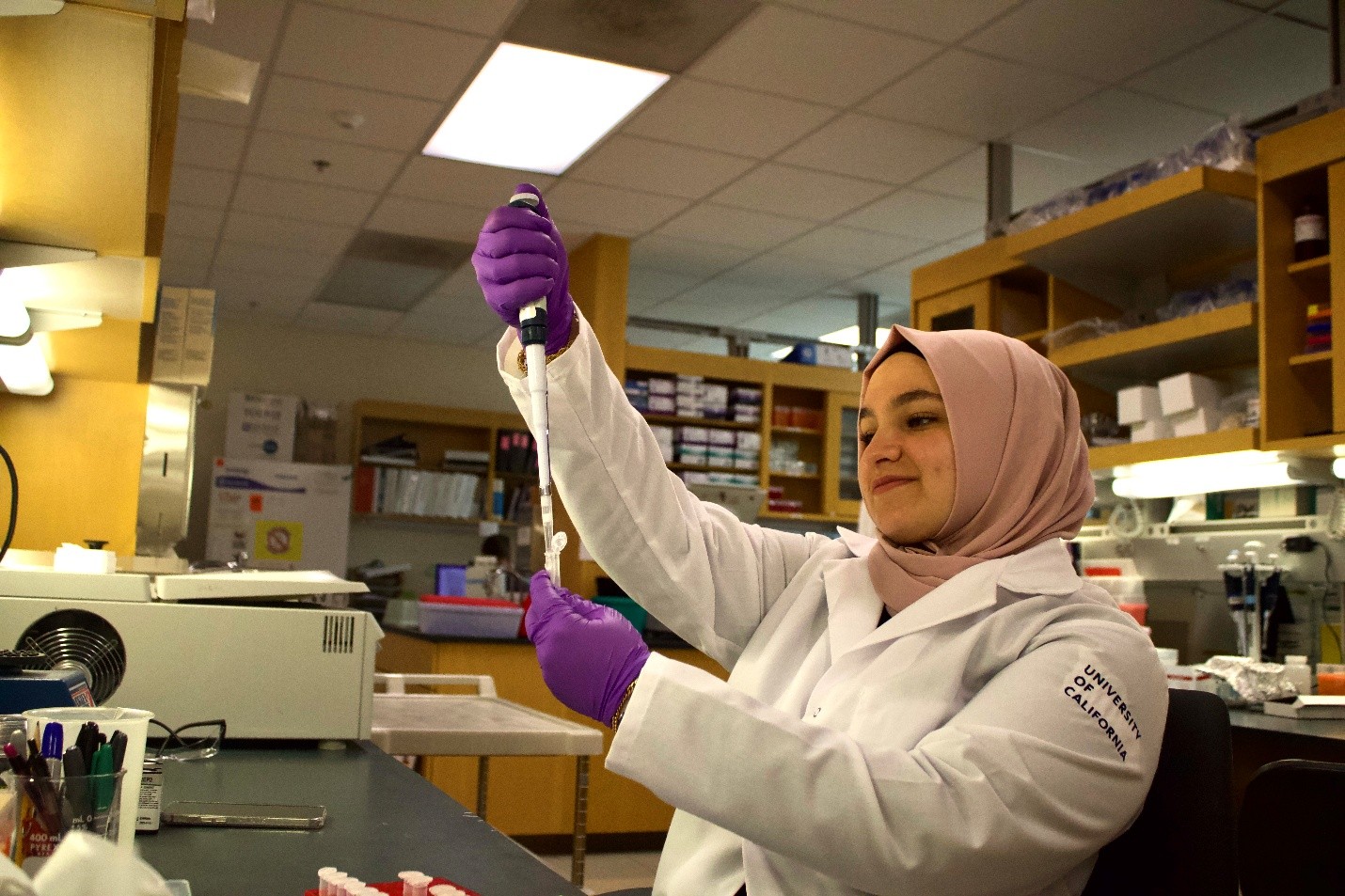
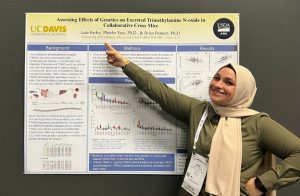
At community college, Farhat joined the Math, Engineering, Science Achievement program, known as MESA, and later worked as a tutor in trigonometry and chemistry. After three years, she transferred to the University of California, Davis, where she gained clinical experience at a COVID-19 vaccine clinic, volunteered at a student-run clinic serving uninsured patients and conducted research focused on chronic metabolic diseases for the USDA.
In clinic as an Arabic speaker, Farhat often helped bridge language gaps between providers and patients.
“Being able to connect with patients in our native language and eliminate that barrier was incredibly meaningful,” she said.
Farhat’s passion for medicine was fueled not by a single health crisis, but by a desire to help people feel seen and understood.
“Discrimination I faced as a child was jarring,” she said. “From being asked about my plans to bomb people to hearing groups of men yell, “Allahu Akbar” in my direction, I became conditioned to expect ignorance, normalize microaggressions, minimize self-expression, and devalue self-advocacy.”
After graduating from UC Davis, Farhat spent three gap years building skills and broadening her perspective. She worked for the Avenue B program, highlighting the contributions of scientists from historically underrepresented communities. She also pursued her love of travel, visiting Turkey, Saudi Arabia, China, Kuwait and, for the first time, Syria after the war ended.
“With the current state of the world, I am especially interested in studies on the impacts of war crimes and violence against healthcare,” she said. “Violations of human rights are not limited to those living in regions of war or genocide, so exploring smaller-scale human rights violations can help limit their growth.”
During that time, Farhat volunteered as a cadaver anatomy lab aide, earned her certified medical assistant credential through Sacramento Job Corps and gained hands-on patient care experience at Sacramento Native American Health Center.
Those experiences reinforced her desire to become a physician who serves diverse communities.
“I carried my values of diversity and inclusion into serving marginalized communities at the Sacramento Native American Health Center where all patients have low socioeconomic status,” she said. “Seeing cancer patients wait for months for treatment showed me the severity of health disparities within my own community. Thoughtful reflection strengthened my advocacy and humility, and brought awareness of my limitations.”
“Leaning into a supportive community taught me to recognize that those who perpetrate discrimination are influenced by systemic oppression,” she added. “I learned that self-expression and advocacy are crucial for ensuring representative and affirming systems of care, not just for those like me, but all marginalized people.”
That mission led Farhat to Charles R. Drew University of Medicine and Science.
“Charles Drew does not hide the fact that they are looking for students who are interested in serving underrepresented populations,” Farhat said. “Everyone here is like me. They’re often first-generation students learning their ropes on their own, and Charles Drew is saying, ‘Come to me and I will give you that guidance.’”
Program Growth Paves Way for a Bright Future
The Sutter Health Scholars Program, in partnership with CDU, launched in 2024 with a $7.5 million investment. Last year, Sutter increased the number of full scholarships from 25 to 50 over five years. This makes the Sutter Scholars Program one of the largest scholarship efforts in CDU’s history and a first-of-its-kind initiative for Sutter.
Students part of the scholars program will get more than just financial help and a debt-free education. They will be matched with mentors at the top of their medical and research specialties, placed in unique clinical settings and given access to the tools needed to succeed in medical school and thereafter.
Receiving the Sutter Health CDU Scholarship helped make Farhat’s dream possible.
“Through this scholarship, I can achieve my goal of becoming an outstanding physician and medical researcher who amplifies marginalized voices and advocates for underserved communities,” Farhat said.