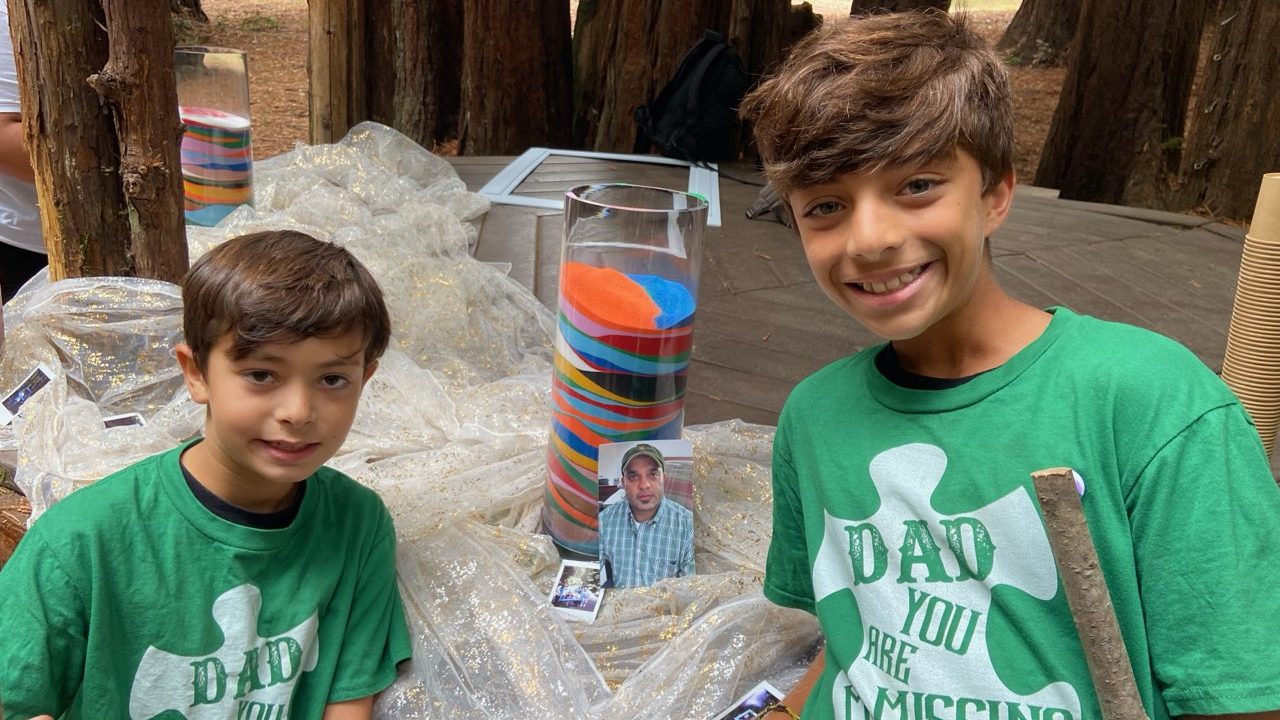
Darshan Purewal, left, and brother Simran work through their grief at Camp Hope over the passing of their father in late 2024.
Sutter Investment Brings Healing to Families Grieving Loss of Loved One
Grief is just love that’s trapped and has nowhere to go because that person is no longer here. Grief doesn’t follow a calendar. It surfaces in quiet moments, milestones and everyday routines. At Camp Hope, families find a space to share that grief without judgement, and with community and connection.
YoloCares, a hospice organization serving families across the greater Sacramento region, launched Camp Hope in September 2024.The weekend retreat in the Redwoods was designed to support families navigating loss, together.
Unlike traditional grief camps that focus solely on children or teens, Camp Hope invites parents, siblings and caregivers to participate side by side. The program was built on the understanding that grief can feel isolating, even within families who share the same loss.
The inspiration behind the camp came from a family systems approach and modern attachment theory. “When a child who’s been working on coping with their own grief, returns to a family that hasn’t, the work is stunted, if not thwarted entirely,” said Chris Erdman, director at YoloCares and the Center for Loss & Hope. “Instead, when a whole family participates together, they share a common experience, shared practices for mourning, a common understanding of grief and its appropriateness. All the while, at Camp Hope, they’ve had fun together on the challenge courses, around the campfire, eating, playing and being with others who understand them.”
That was the inspiration behind Camp Hope: giving families the tools they need to transform their pain rather than transmit it.
Camp Hope Through Ajit Purewal’s Eyes
Ajit Purewal is the mother of two boys: Simran, who was 10 when his father passed away, and Darshan, who was just 6. She and her husband, Satnaum Purewal, were married for 29 years before his death in November 2024.
“He struggled with emotions he didn’t know how to express,” Ajit shared. “He turned to alcohol to cope, and it was devastating to watch it take over his life.” Satnaum passed away from a heart attack on Nov. 16, 2024.
“Our marriage was a good one, a long one. Satnaum was deeply loved by his family. Losing someone you love is always painful but losing a spouse changes everything. You lose your identity. Relationships shift — sometimes for better, sometimes for worse.”
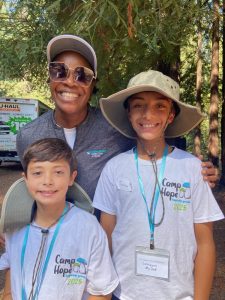
“Because of Ada, we learned about Camp Hope. I knew we needed to heal together — and this felt like the right step.”
In the wake of his passing, Ajit knew she needed support. She enrolled in evening grief therapy and participated in an art therapy program through Sutter Health, which also extended to her sons at their school. Every week, Simran and Darshan came home excited to share their artwork and talk about their grief counselor, Ada.
“Ada was born for this work,” Ajit said. “She was open, kind and honest about her own grief. The kids adored her and felt safe with her. Because of Ada, we learned about Camp Hope. I knew we needed to heal together and this felt like the right step.”
When Ada first mentioned Camp Hope, Ajit hesitated. “We’re not a camping family,” she laughed. “Communal bathrooms? Terrifying. But I thought, what the heck, let’s try it.”
Based on her experience with YoloCares and Sutter Health, Ajit expected the camp to be meaningful, but she was overwhelmed by how impactful it truly was.
Upon arrival, families were grouped with others who had experienced similar losses. For Ajit and her boys, that meant connecting with families who had also lost loved ones to addiction. “There was an immediate sense of shared grief,” Ajit said. “We didn’t have to explain ourselves. We just understood each other.”
Grief can make you feel like you no longer fit in, Ajit reflected. “You have friends, maybe a couple friends, but after a loss, you feel like you’re on the outside looking in.” That feeling was especially strong for Simran. Baseball was hard for him this past spring, Ajit recalled. His dad used to be so involved. Without him there, Simran felt like he didn’t belong.
But at Camp Hope, something shifted. “My kids were laughing again. They felt like they fit in. We did yoga, sound baths, group discussions, football, ziplining — and at the end, we drummed out our grief. There were tears, laughter and love all around.”
One of the most healing moments for Ajit was seeing her extended family express their emotions about Satnaum. “When someone dies, people get scared to say their name. But you want them to. You want to know others loved them too.”
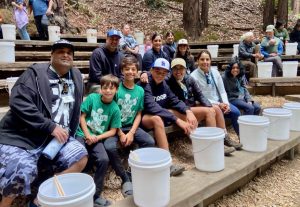
“For my boys to see that empathy, to know that I’m here and their family is here for them — that was incredibly strengthening.”
Ajit invited her husband’s family to join them at Camp Hope, unsure how they would respond. To her surprise, they came — 12 family members in total. “It meant everything for my kids to hear how much their dad was loved. It helped them see their family in a new light and connect with them on a deeper level.”
Simran, her eldest, summed it up best as he looked around the other camp families: “We’re so lucky to have this support system.”
Ajit agrees. “For my boys to see that empathy, to know that I’m here and their family is here for them—that was incredibly strengthening.”
The Faces of Grief
Grief looks different for everyone and often shows up in ways people don’t expect. “Children, for example, tend to move in and out of their grief like a pendulum. One moment they may feel the deep ache of missing their special person, and the next they’re laughing and playing. Teens may withdraw, struggling with isolation or uncertainty about how to express what they’re feeling. Adults often carry the dual burden of processing their own grief while trying to support their children through theirs,” cited Cynthia Anderson, YoloCares for Kids coordinator.
At Camp Hope, the team understands that grief is layered and complex. For children, healing begins with feeling safe — safe enough to step out of their protective shell, even briefly, and share what’s inside, Anderson said. For adults, those shells often grow thicker over time, shaped by past losses, trauma and life experiences. Grief isn’t just about death: it can stem from abandonment, betrayal, injustice or major life changes. When these wounds go unaddressed, they don’t disappear — they accumulate, waiting for one more loss to push everything to the surface.
Camp Hope offers a space where those layers can begin to unfold. At Camp Hope, grief is normalized, not pathologized. Participants learn they aren’t broken or alone: they’re simply grieving, and that’s a deeply human experience. Through compassionate community, somatic healing practices and shared stories, camp participants begin to process what they’ve carried, sometimes for years.
Grief doesn’t need to be fixed. It needs to be witnessed. And at Camp Hope, families are given the space to be exactly where they are: messy, tender and real. Alongside others who understand.
Gratitude and Partnership
The Center for Loss & Hope and its YoloCares for Kids programs are part of YoloCares’ broader mission to support grieving families across the region. While these programs operate independently, their growth and reach have been deeply strengthened by the support of Sutter Health.
Over the past two years, Sutter Health has invested more than $200,000 to fully fund Camp Hope, making it possible for more than 200 individuals to attend free of charge, including travel assistance through gas cards to ensure no family faces financial barriers to participation. For families in grief, this kind of support is transformative: nearly 50 comment cards written by children, teens and adults from last year’s camp expressed heartfelt thanks for the experience and the healing it made possible, Erdman noted.
“This partnership goes far beyond funding,” said Angelika Corchado, director of community health at Sutter Health. “Our teams have had the privilege of participating in Camp Hope, contributing time, compassion and expertise. Together, we’ve helped shape a program that’s now recognized across the region for its innovative, family-centered approach to children’s grief.”
Sutter Health’s community health investments play a vital role in improving the well-being of the populations it serves, especially those facing the greatest challenges. Through its External Affairs team, Sutter collaborates with local organizations to expand access to care and support services like Camp Hope — strengthening the communities it serves.
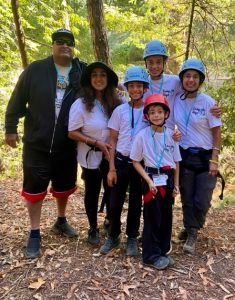
Ajit laughed about the moment she stood at the edge of the zipline, heart racing, and thought, “What the hell, I’m going to do it whether I’m scared or not.” That leap of courage captures the spirit of Camp Hope: connection, resilience and healing in action.
Beyond Camp Hope, Sutter Health has been a key partner in helping YoloCares extend grief support into underserved and marginalized communities. Together, they’ve worked to provide culturally responsive care to Black, Indigenous, Latino/a, and LGBTQIA+ families, meeting people where they are, with compassion and respect.
Partnerships like this open doors for families who might never see themselves as ‘grieving’ or consider therapy an option. For some, the word ‘grief’ isn’t even in their vocabulary. Camp Hope changes that. Rewriting the narrative and creating a space where remembrance, love and healthy healing aren’t just possible; they’re embraced.
“Where you thought you couldn’t do something, everyone was cheering everyone on,” Ajit shared, recalling the incredible bond between children and adults. She laughed about the moment she stood at the edge of the zipline, heart racing, and thought, “What the hell, I’m going to do it whether I’m scared or not.” That leap of courage captures the spirit of Camp Hope: connection, resilience and healing in action.