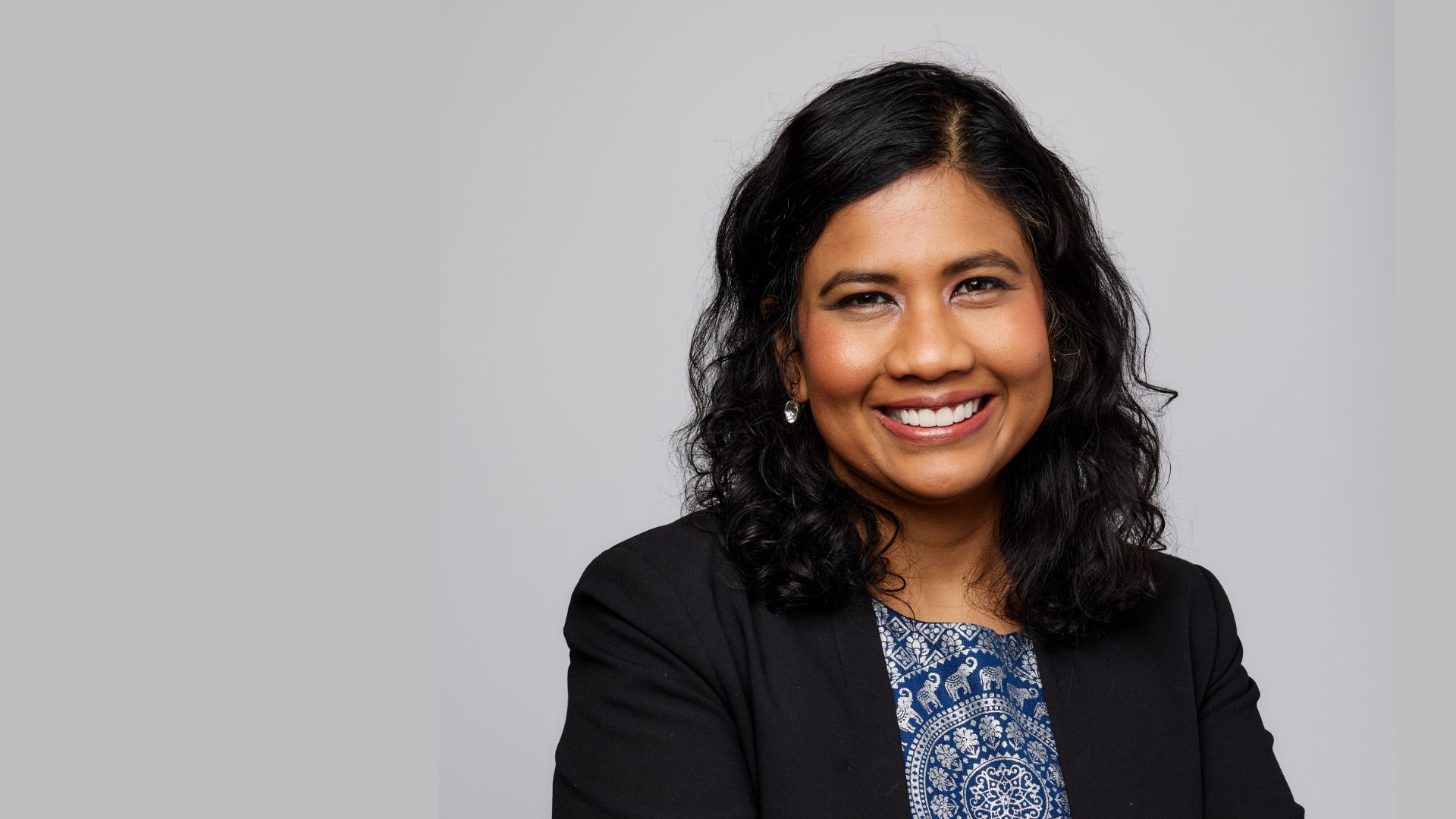
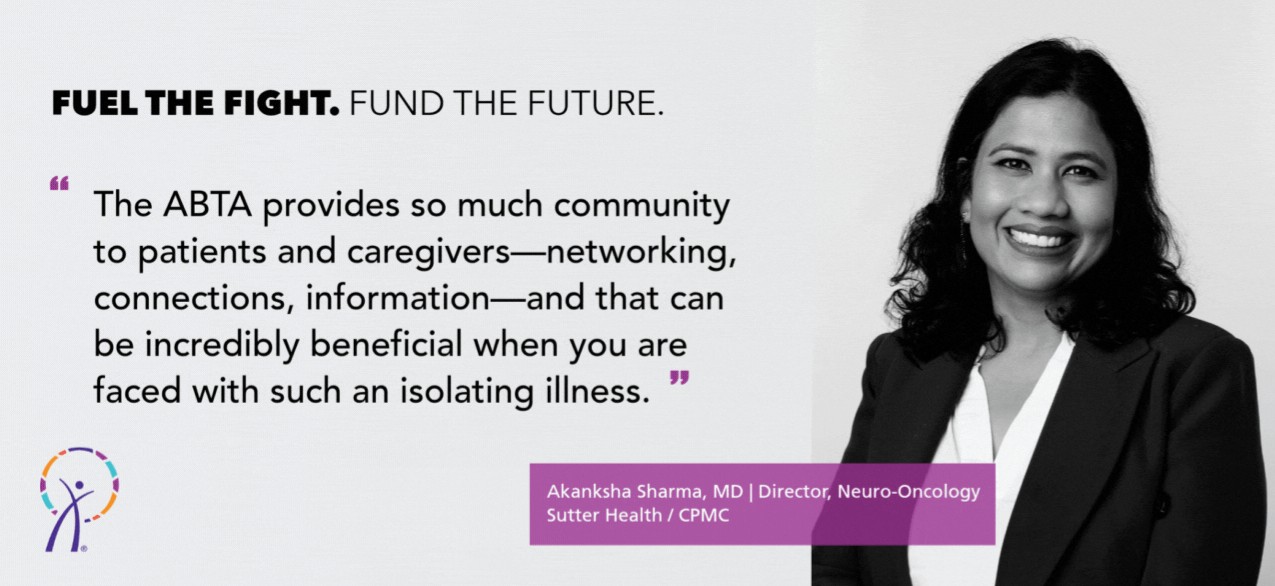
The American Brain Tumor Association, ABTA, recognizes Dr. Akanksha Sharma as she also helps establish Sutter Health’s first neuro-oncology program.
When Dr. Akanksha Sharma talks about brain tumor care, her passion is unmistakable. That dedication is now earning national attention as the American Brain Tumor Association features her in its latest social media campaign, highlighting her steady commitment to patient education and advocacy. At Sutter Health, Dr. Sharma serves as the system’s first neuro-oncologist and is helping build a growing multidisciplinary and person-centered brain tumor program that brings coordinated care and research to more patients. We sat down with her to talk about the ABTA campaign and the work underway at Sutter to expand advanced brain tumor services to reach more people.
Q: How did you first get involved with the American Brain Tumor Association?
A: I’ve worked with the ABTA for years as a neuro-oncologist. I began by supporting their advocacy and fundraising events and helping organize 5K walks in Los Angeles. Over time, I became more involved in their education and patient programs, giving talks and, this last year I was invited to speak at their national conference, which is the largest patient- and caregiver-focused brain tumor meeting in the country. I also serve on the ABTA’s Clinical Advisory Council, a role I cherish.
Q: What about ABTA’s mission resonates with you?
A: The ABTA is deeply focused on educating, empowering and advocating for patients and caregivers. They fund research, support families and unite the brain tumor community. This focus very much aligns with my own patient philosophy and the work I do. I want patients with brain tumors to live well as they go through treatment, have access to options that work better than what’s currently available and do not require them to compromise on quality of life, and benefit from high-quality, innovative research. I firmly believe that education and information are empowering and essential on this very difficult journey.
See Dr. Sharma’s ABTA campaign videos on ABTA’s social channels here: Instagram, TikTok, LinkedIn
Q: You’re the first neurology-trained neuro-oncologist recruited to Sutter. What does that mean for patients?
A: Yes – I’m the first, and currently the only, neurology-trained neuro-oncologist at Sutter Health. While several medical oncologists see brain tumor patients, I was recruited specifically to partner with our chief, Dr. Lewis Leng, to build a robust multidisciplinary brain tumor program, which can serve as a resource and home for patients across our system. My practice includes caring for people with all types of primary and secondary brain and spinal cord tumors, from gliomas and glioblastomas to rare tumors and metastatic disease. I also focus on managing neurological complications of cancer and treatment, helping patients reduce the burden of side effects from radiation, chemotherapy and immunotherapy.
Q: What vision are you and your colleagues building for brain tumor care at Sutter?
A: At Sutter, along with Dr. Leng, we are building a person-centered program that provides patients and their families with a holistic treatment experience from diagnosis all the way to end of life. This means that when patients are facing a life-changing brain tumor diagnosis, they are immediately connected with a team that is dedicated to making their journey as easy as possible via coordinated appointments, multidisciplinary expert opinions, treatment recommendations informed by the latest research, clinical trials if and when appropriate, and a focus on the whole body and person rather than just the disease. We keep a compassionate focus on the person living with the disease and their loved ones, providing both quality and quantity of life at each stage. This care model takes advantage of all the various strengths of Sutter Health. We have many specialties and experts in palliative care, integrative medicine, acupuncture, rehabilitation, psychology, brain health and more, and we are bringing all of that together to our brain tumor program that already includes neurosurgery, radiation oncology, medical oncology and neurology – and now neuro-oncology.
Q: Where does research fit into Sutter’s future in brain cancer care?
A: We aim to be a center for innovative brain cancer research. Sutter already has an excellent translational research program led by Dr. Anne Marie Barrette, and we plan to complement that with clinical trials across different phases. Ensuring patients have access to as many evidence-based options as possible is central to our mission as a not-for-profit healthcare delivery system and robust neurosciences team.
Q: How is ABTA supporting programs like the one you’re building at Sutter?
A: The ABTA is a strong advocate for high-quality brain tumor programs in community-based settings, where most patients actually receive their medical care. They’re excited about Sutter’s growth and are committed to working with us to support patients and families. The ABTA recently published guidelines for brain tumor programs, and Sutter’s eager to meet those standards as we continue expanding the care we provide.
Dr. Akanksha Sharma is a triple board-certified neurologist, neuro-oncologist and palliative care specialist. Her scope of practice includes primary and metastatic brain and spinal cord tumors, neurological side effects from cancer and cancer treatment, leptomeningeal disease, paraneoplastic disorders, neurological toxicity from immunotherapy, long-term toxicity from radiation, survivorship and support for patients with cancer and neurological disease.