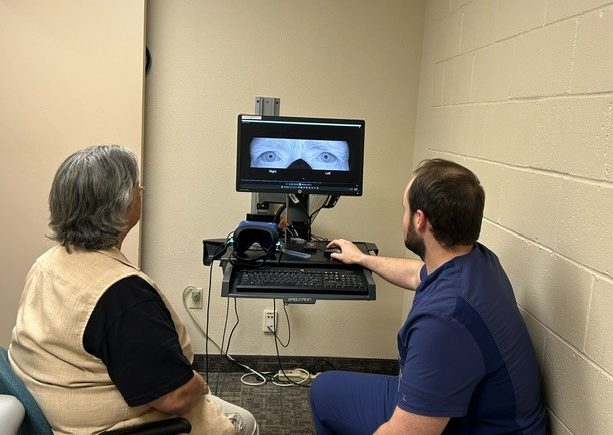
Photo: Using cutting-edge infrared goggles, Dr. Benjamin Surman, DPT, guides Physical Therapy Assistant Rebecca Vigil through a balance and vertigo assessment at Sutter Lakeside Hospital.
Dizziness can turn daily life into a maze. For many in Lake County, Calif., where one in four residents is age 65 or older, vertigo isn’t just disorienting – it’s dangerous. Nearly 40% of adults will experience a vertigo or balance disorder in their lifetime, and for older adults on multiple medications or with chronic conditions, the risks of falls and injuries are even higher.
The rehabilitation services team at Sutter Lakeside Hospital is offering hope by using infrared goggles to assist in more accurate assessment and treatment of vertigo, dizziness and feelings of imbalance.
“Understanding the source of vertigo directly impacts how we treat it,” says Dr. Myriah Surman, lead physical therapist at Sutter Lakeside.
The goggles capture eye movements in complete darkness, revealing subtle involuntary motions called nystagmus. These tiny movements help clinicians distinguish between inner ear and brain-related issues, offering critical clues about the source of a patient’s dizziness.
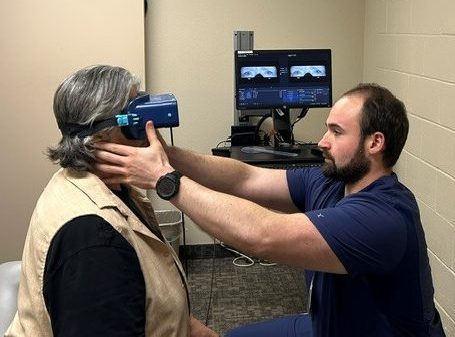
Benign paroxysmal positional vertigo, triggered by dislodged inner ear crystals, is a leading cause of dizziness among older adults. With this new tool, the team can better differentiate and manage a wide range of balance conditions, including PBBV, Meniere’s disease, vestibular neuritis, labyrinthitis and post-concussive syndromes.
The goggles also record video playback, giving clinicians the ability to review recordings, confirm diagnoses, educate patients about their condition and monitor progress over time. “[The video] helps patients understand what’s happening in their own bodies. That understanding increases their confidence in the treatment process,” says Dr. Surman.
Advanced care may be required. “If we see signs that a person’s dizziness may be related to a more complex condition, we share our findings with the appropriate specialist right away so they can get the medical attention they need,” says Dr. Surman.
The team coordinates closely with other referring physicians at Sutter – including primary care providers, ear, nose and throat specialists, and neurologists – to help ensure comprehensive care.
Sutter Lakeside is the only clinic in Lake County offering this diagnostic capability, made possible by a generous grant. The team uses the goggles regularly.
“Dizziness is debilitating,” says Dr. Surman. “For patients, having access to this technology means they can get answers and treatment faster, and start feeling better sooner.”