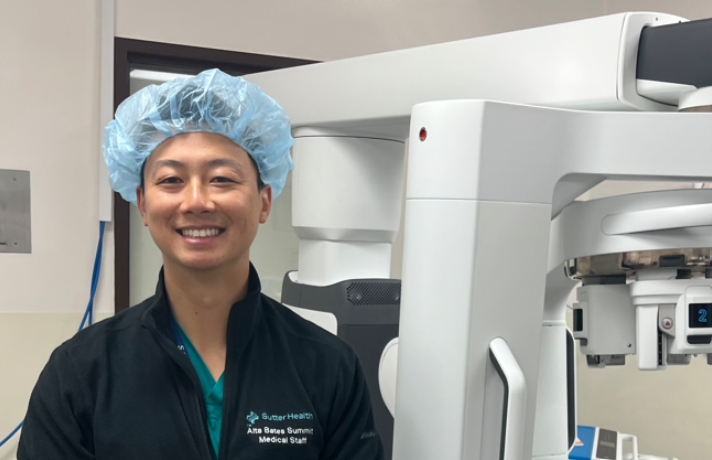
Above: Dr. Andrew Tam successfully performed the first urologic surgeries using the da Vinci Single-Port robotic system at Sutter’s Alta Bates Summit Medical Center. Instead of multiple ports placed several centimeters apart, the SP platform allows surgeons to operate through a single, small incision, using one robotic arm equipped with multiple flexible instruments and a high-definition camera.
By Cat Valles, Vitals contributor
Sutter’s Alta Bates Summit Medical Center has reached a new milestone in minimally invasive cancer care with the successful completion of its first urologic surgeries using the da Vinci Single-Port robotic system. On March 3, urologist and urologic oncologist Dr. Andrew Tam, with Sutter East Bay Medical Group, performed a radical prostatectomy and a pyeloplasty, expanding access to advanced single-incision surgery for patients in the East Bay.
Prostate cancer is one of the most commonly diagnosed cancers among men, and when the disease is confined to the prostate, surgery is often recommended to remove the cancer and prevent it from spreading. Traditionally, these procedures require multiple abdominal incisions and prolonged positioning during surgery — factors that can contribute to increased discomfort and longer recovery times.
The da Vinci SP system represents a significant evolution in robotic surgery. Instead of multiple ports placed several centimeters apart, the SP platform allows surgeons to operate through a single, small incision, using one robotic arm equipped with multiple flexible instruments and a high-definition camera. This approach is designed to allow access to small spaces that were previously difficult to work within — while also minimizing disruption to surrounding tissues.

Christina Oh, president of Sutter’s Greater San Francisco & East Bay Division
“Introducing the da Vinci Single-Port system at Sutter’s Alta Bates Summit Medical Center reflects our ongoing commitment to bringing leading-edge, patient-centered care to the communities we serve,” said Christina Oh, president of Sutter’s Greater San Francisco & East Bay Division. “Working in tandem with our philanthropic donors, Sutter Health is investing in innovative technologies to help ensure patients can access advanced surgical options close to home, with the potential for better outcomes and faster recovery.”
That commitment to innovation continues to shape how care is delivered across specialties, particularly in complex procedures where precision and recovery time matter most.
Minimally invasive, maximum reach
“Single-port surgery allows access to areas we couldn’t safely or efficiently reach before because traditional robotic surgery requires multiple ports spaced apart,” said Dr. Tam. “With SP, we can optimize access and perform procedures without ever entering the abdomen.
“This allows us to be very precise while minimizing the physical impact of surgery,” he added. “Our focus is always on removing the cancer completely while supporting a smoother recovery for patients.”
This approach can be especially beneficial for urologic procedures such as prostatectomy, pyeloplasty and kidney surgery, where avoiding the abdominal cavity may reduce the risk of complications.
In the operating room and during recovery, the advantages for patients can be significant. Fewer incisions typically mean less pain after surgery, and patients often recover more quickly than with traditional multi-port approaches.
“Because patients have fewer incisions, pain is often less and recovery tends to be faster,” Dr. Tam said. “With multi-port surgery, patients may expect a full recovery in about four weeks. With single-port surgery, that recovery can be closer to two weeks for many patients.”
Reduced complications, shortened recovery time
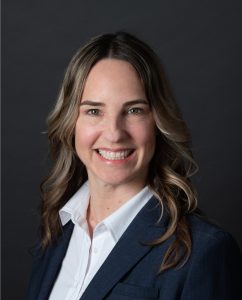
Dr. Ursula Boynton, chief medical executive of Sutter’s Alta Bates Summit Medical Center
Dr. Ursula Boynton, chief medical executive of Sutter’s Alta Bates Summit Medical Center, agrees that from a clinical perspective, the benefits of single-port surgery extend beyond the operating room, shaping how patients experience recovery and long-term outcomes.
“Advances like the single-port robotic system allow us to deliver highly specialized surgical care while reducing the physical burden on patients,” she said. “By minimizing tissue disruption and improving surgical precision, we’re not only enhancing safety in the operating room, but also supporting shorter recoveries and better overall patient experiences.”
For Dr. Tam, bringing this technology to Alta Bates Summit is both a professional highlight and a reflection of how rapidly the field has evolved.
“I was fortunate to train with the single-port system when it was still in its trial phases,” he said. “Early on, surgeons were using it much like traditional multi-port robotics. Over time, we’ve developed new techniques that truly maximize the single-port system’s benefits.
“It’s exciting to see how far the platform has come,” Dr. Tam added, “and to bring that level of innovation to patients here in the East Bay.”
Better outcomes made a reality through philanthropic generosity
Philanthropy helped make the acquisition of the da Vinci SP technology possible. Funding was provided by longtime benefactor Peter Read, whose initial gift more than 17 years ago led to the creation of the Carol Ann Read Breast Health Center at Alta Bates Summit — a tribute to his late wife, Carol, who passed away from breast cancer in 1998. That early investment laid the foundation for a comprehensive, patient‑centered breast care program that continues to expand access to advanced treatments across specialties today.

Funding from philanthropist Peter Read helped make the acquisition of the da Vinci SP technology possible.
“It was exciting to see the delivery of the single port robot to Alta Bates Summit, and it truly fulfills a lifelong dream,” Read said. “Helping this talented team of surgeons receive this remarkable equipment at Sutter Health — and ensuring our community is the first in the region to benefit from these advanced treatments — has been an incredibly meaningful journey.”
While breast cancer care was the original focus of the philanthropic investment, the SP platform is now expanding minimally invasive options for patients across multiple specialties — including urology.
The introduction of the da Vinci SP system at Alta Bates Summit reflects Sutter Health’s commitment to advancing surgical innovation while keeping care centered on the patient experience. By expanding access to leading-edge technology within community hospitals, Sutter continues to deliver highly specialized care close to home — helping more patients benefit from the latest advances in minimally invasive surgery.