A highly coordinated team of first responders, including Sutter Medical Group of the Redwoods’ own Dr. Daniel Brenner, saved Karen Neely’s life.
By Rob Lopez, Vitals contributor
On the morning of Feb. 25, 2026, Jim Neely decided his wife needed to see a doctor. Quickly!
Karen Neely, a 70-year-old Santa Rosa resident, had not been feeling well for days. Just 10 days earlier, she was discharged from Kaiser in Santa Rosa with a diagnosis of congestive heart failure. Unfortunately, the familiar symptoms returned – weakness, difficulty breathing, chest discomfort.
“I decided we were going back to the emergency room,” Mr. Neely said.
He started the car and went back inside to help his wife walk to the car. As he entered the house, that’s when everything changed.
“I saw her have what I thought was a heart attack,” he recalled. “I saw her slump over in the chair.”
It was now a race against time for this couple who have been married for 49 years. What happened next would prove critical. Drawing on CPR training Neely received years earlier, he lowered his wife to the floor and began chest compressions, while simultaneously calling 911.
“I knew what to do,” he said. “I just never expected to have to do it.”
Within minutes, first responders from a nearby fire station arrived. They took over, but Neely’s heart had stopped beating. It would take more than 20 minutes before it would start pumping on its own again.
A System Designed for Moments Like This
Sutter Santa Rosa Regional Hospital
Neely was transported to Sutter Santa Rosa Regional Hospital where a highly coordinated team, including Sutter Medical Group of the Redwood’s Interventional Cardiologist Dr. Daniel Brenner, sprang into action through the STEMI program. A STEMI (ST‑Elevation Myocardial Infarction) is one of the most serious types of heart attack, caused by a complete blockage of a coronary artery. Dr. Brenner discovered quickly that Neely had not actually suffered a STEMI, but rather a sudden cardiac death or fatal heart arrhythmia, due to chronic coronary disease. Dr. Brenner performed a cardiac catheterization to look inside her arteries and evaluate her heart function.
The type of acute heart failure that Neely experienced requires immediate mechanical and medical intervention to remove stress on the heart. At Sutter Santa Rosa, the STEMI program activates a regional system of care designed to respond to incidents like this within minutes. Emergency Medical Services, EMS, teams identify the event in the field and alert the hospital before arrival. Emergency physicians, cardiology specialists, nurses and technicians mobilize simultaneously, preparing for rapid treatment and stabilization.
“If you had to pick a single thing that saved Karen’s life, it was Jim performing CPR on his wife until the EMTs arrived and took over,” Dr. Brenner said. “Jim and the EMTs are the heroes of this story.”
The STEMI program is a huge collaboration that builds upon all the critical steps – from the first call to the dispatcher and the groundwork done by EMTs in the field – extending to the delivery of patients to hospitals that provide specialized care. There’s no time to waste. With Neely’s case, it all went beautifully.
“It’s just an awesome community system that has become routine these days, but there really isn’t anything routine about this,” Dr. Brenner said.
Dr. Daniel Brenner
Neely was given three heart shocks by the EMTs who administered CPR for 25 to 30 minutes before she came back to life. “It was very close to the EMTs calling code on her, but she came back,” Dr. Brenner said. “They did an amazing job.”
When Dr. Brenner first saw Neely, he took her straight away to the hospital catheter lab in Santa Rosa where he placed an intra-aortic balloon pump into her heart to help it pump more efficiently. After performing left and right-side heart catheters, she was ready to be transferred to a higher level of care and surgical evaluation.
In 2025 alone, 50 STEMI patients arrived through the Santa Rosa emergency department, and 62 were treated at the hospital – a reflection of both the frequency of these emergencies and the importance of being ready every time. When Neely arrived, that system was executed flawlessly.
“There were about eight people working on her in the ER,” Mr. Neely said. “Everything was happening so fast.”
For the next six hours, teams worked to stabilize Neely – monitoring her condition, providing life-sustaining care, and preparing her for transfer to a higher level of cardiac care.
“They did a fantastic job,” he said. “Everybody was working hard the whole time.”
From Emergency to Recovery
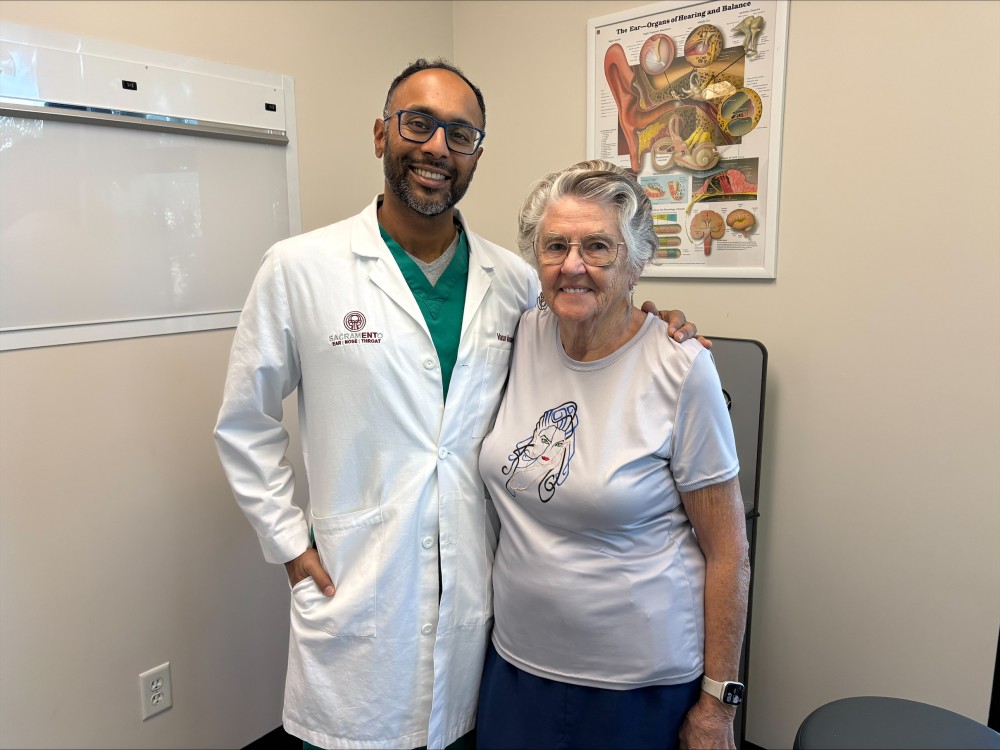
Karen Neely and Dr. Daniel Brenner
Later that evening, Neely was transferred to Kaiser San Francisco for advanced cardiac care. By the next morning, she was already making progress and breathing on her own. But recovery came gradually. For several days, Neely had little memory of what had happened. It wasn’t until Saturday – four days later – that she began to fully understand where she was and what had happened.
“They kind of spoon-fed me the information,” she said. “It’s a miracle. I’m thankful I was at home in my living room. Not on the road when this happened.”
One moment brought the severity of the event into focus. “When I got home and saw the clothes that had been cut off me, that really hit me,” she said. “Just the urgency of it.”
Beyond the Hospital: The Survivor Journey
Neely is now part of a larger community known as STEMI survivors – patients who have received emergency treatment, stabilized, and moved into recovery and long-term heart health. At Sutter and across the region, care doesn’t end when a patient leaves the hospital. The STEMI system of care extends into a “survivor” phase focused on recovery, prevention and quality of life.
This includes:
- Cardiac rehabilitation with supervised exercise and strength-building
- Patient education on warning signs, medications and heart-healthy living
- Coordinated follow-up care with cardiology and primary care teams
- Emotional and psychological support, addressing anxiety and fear after a cardiac event
- Lifestyle coaching to reduce future risk and prevent recurrence
These components are critical. While an estimated 250,000 to 300,000 STEMI heart attacks occur each year in the U.S., survival rates for cardiac events have improved dramatically thanks to rapid, coordinated care, especially when systems like this are in place.
Gratitude and Reflection
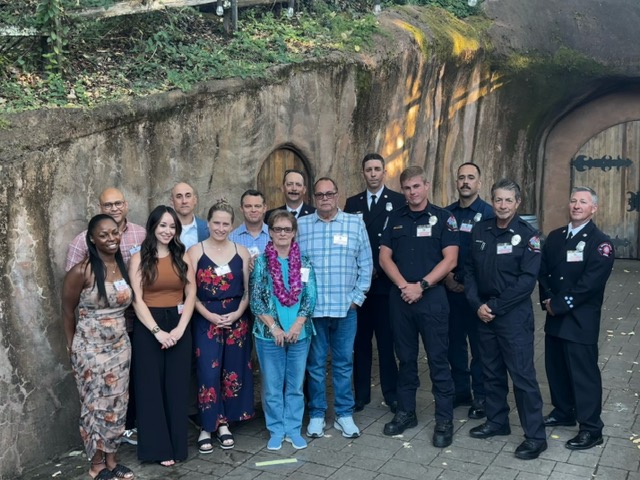
Karen Neely and Jim Neely at the 32nd annual STEMI Survivors’ Reunion, held at Benzinger Family Winery in Glen Ellen on May 21, 2026.
Nearly three months later, Neely is now focused on recovery – walking, rebuilding strength, and adjusting to a new routine that includes medications, monitoring and gradual physical activity. She and her husband attended the 32nd annual STEMI Survivors’ Reunion, held May 21 at Benzinger Family Winery in Glen Ellen. It was the first opportunity they had to thank Dr. Brenner and all the first responders and clinicians who helped save Neely’s life.
Her experience on Feb. 25 underscored how every link in the chain of care matters.
“Everything fell into place,” Mr. Neely said. “The paramedics got there quickly. We went to the right hospital, Sutter Hospital. The doctors were ready. Everyone knew what to do.”
A Message for Others
The Neelys now feel a responsibility to share what they’ve learned. “Don’t ignore the symptoms,” she said. “Go get checked.”
For Mr. Neely, it’s also about being prepared. “CPR made a difference,” he said.
The Neely’s story is a powerful reminder: survival from a life-threatening cardiac event is rarely the result of a single moment or a single person’s efforts. It is the product of a highly coordinated team effort delivered by experts who are ready to act.