By Kathy Engle, Vitals contributor
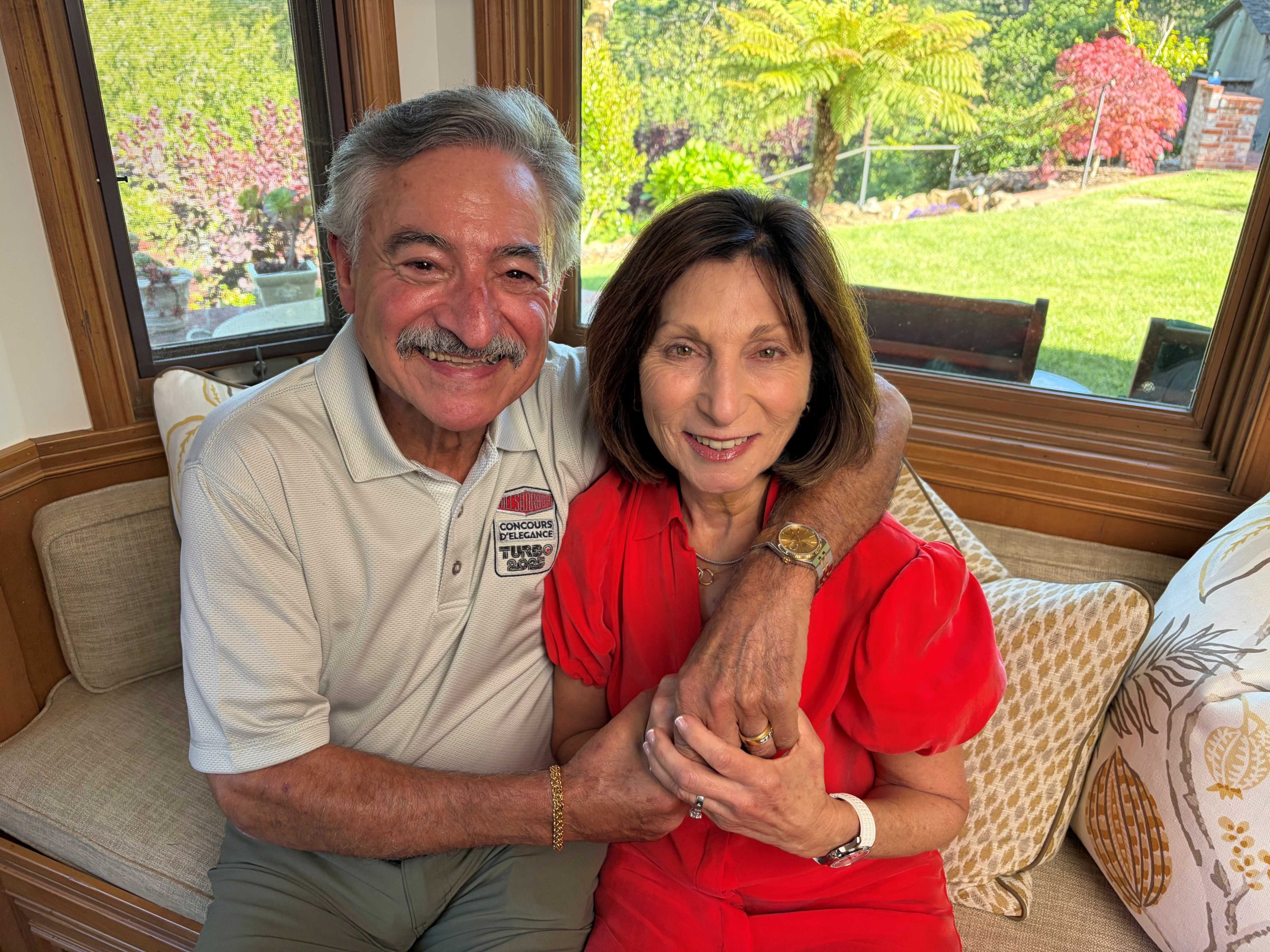
When Mark Benson woke before dawn on a Saturday morning, he was thinking about golf.
The 72-year-old Burlingame resident had just shot a remarkable round of 77 at the Peninsula Golf and Country Club and was already looking ahead to his next outing. “I only golf on days ending in ‘y,’” he likes to joke.
But that morning, something was wrong.
“During the night, around 3 a.m., I felt a tingling in my right arm,” Benson recalls. “I fell back asleep, but when I tried to get dressed, I kept losing my balance and falling down.”
He called out to his wife, Laurie, who immediately noticed something alarming.
“The right side of his face was drooping, and his balance was off — I knew it was a stroke,” she says.
Recognizing the Signs and Acting Fast
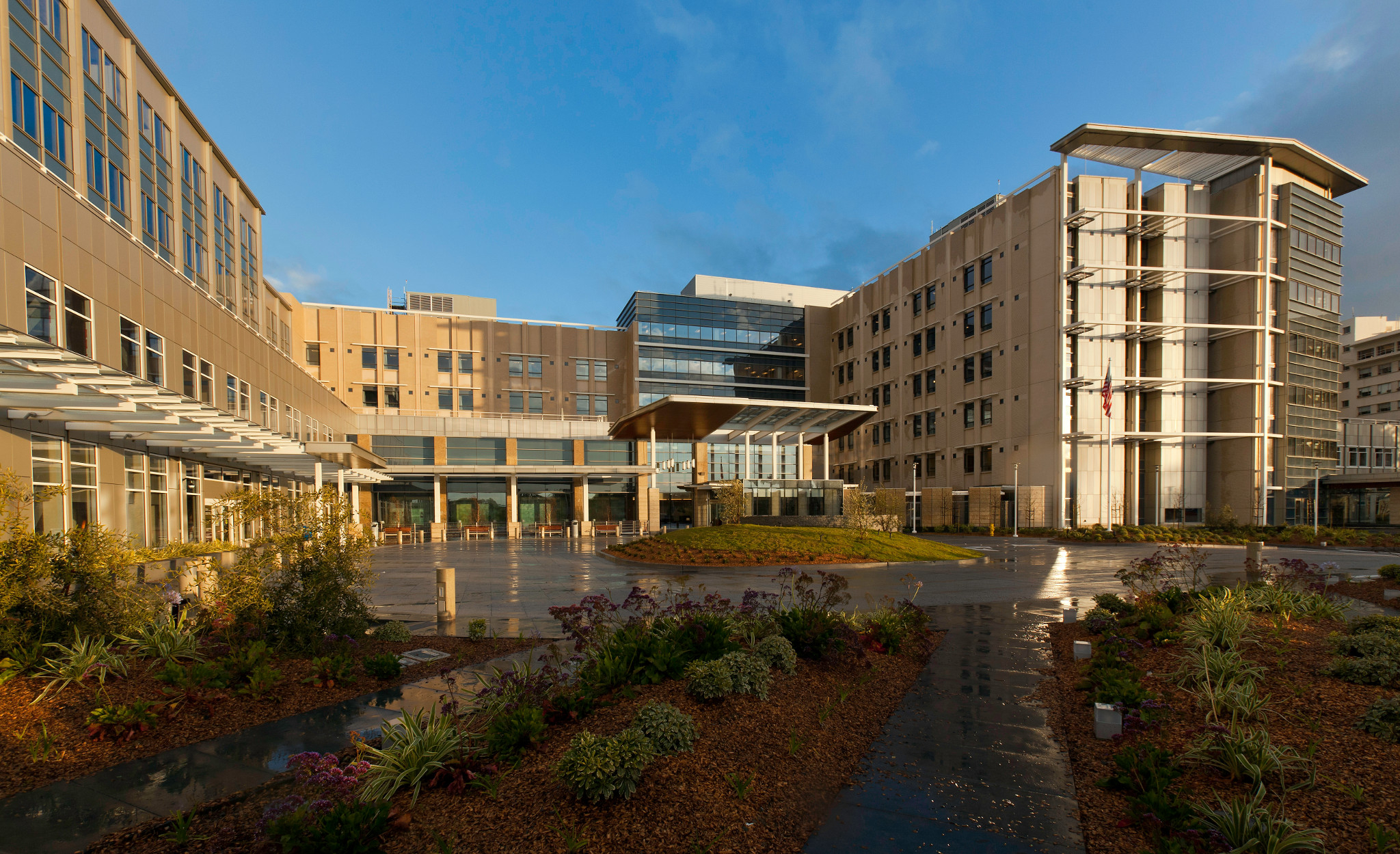
Sutter’s Mills Peninsula Medical Center in Burlingame, Calif.
Mrs. Benson recognized the warning signs because she is familiar with the BEFAST acronym — Balance, Eyes, Face, Arms, Speech and Time — a simple but critical tool for recognizing the signs of stroke. She didn’t hesitate.
Living just minutes from Sutter Mills-Peninsula Hospital, Laurie knew help was close.
“They brought him straight in,” Laurie says. “But while they were doing tests, he seemed to be losing strength on his right side. It was terrifying.”
Because too much time had passed since Benson’s symptoms first appeared overnight, he was not a candidate for the clot-busting drug tenecteplase, or TNKase®. Instead, the team moved quickly to advanced imaging, including a stroke CT scan and MRI, to confirm the diagnosis and guide treatment.
Benson was admitted for close monitoring and repeat imaging to watch for bleeding or signs of a larger stroke. After five days in the hospital, he was transferred to an inpatient rehabilitation center in Los Gatos where he spent 17 more days rebuilding strength and mobility.
Solving the Stroke Riddle
Benson appeared to be living a healthy, active lifestyle. He showed no obvious warning signs or risk factors for severe cardiovascular disease. Yet beneath the surface, symptoms had been silently building.
“Mark experienced a hypertensive stroke affecting a small vessel in his brain,” explains Dr. David Kurzrock, a Sutter cardiologist who began caring for Benson after his rehabilitation.
Further evaluation during Benson’s stroke care uncovered psoriasis — a lesser-known cardiovascular risk factor that Benson was also unaware he had. Dr. Kurzrock ordered a heart CT scan revealing narrowing in Benson’s left anterior descending artery — the largest artery of the heart, supplying half the oxygenated blood to half the left ventricle.
Two months after Benson’s stroke, Dr. Kurzrock placed two stents in his LAD artery.
“We frequently see patients after a stroke who, like Mark, were unaware they had coronary artery disease at all,” explains Dr. Joey English, medical director for stroke at Mills-Peninsula. “It is not unusual for patients to experience a stroke and then suffer a heart attack within a year or vice versa.”
This interconnected reality is what drives heart, vascular and brain specialists at Mills-Peninsula to work collaboratively, looking for root causes of disease and solving what can often be a complex medical puzzle.
The Connection Between Heart Disease and Stroke
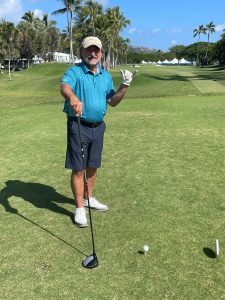
Mark Benson is happy to be enjoying golf again.
Benson’s experience unmistakably illustrates the close link between heart disease and stroke. Both are forms of cardiovascular disease — affecting different organs yet sharing common risk factors, underlying causes and prevention strategies.
Through lifestyle changes such as diet and exercise, combined with appropriate medications, patients can slow the progression of disease. Coupled with the latest imaging technologies and less-invasive interventional procedures to unblock arteries, correct heart rhythm problems or remove neurologic clots, treatments for cardiovascular disease have advanced dramatically in the last few decades.
Despite these advances, nearly half of all American adults live with some form of cardiovascular disease. According to the American Heart Association, heart disease and stroke together account for more than one in four deaths nationwide.
“We know more about these diseases, and we have more treatment options, but the simple truth is that regular screening can save lives,” says Dr. Kurzrock.
As with many diseases, earlier detection and timely changes to address risk factors significantly improve long-term outcomes. Risk accelerates significantly for men over 65 and women over 70, making routine screening and ongoing conversations with healthcare providers essential.
Grateful for Compassionate, Local Care
Sutter and Mills-Peninsula have been at the forefront of many of the most important advances in cardiovascular care and are consistently ranked among the best regional hospitals in California for treating heart conditions. A newly announced cardiovascular care expansion project at Mills-Peninsula will add 42,000 square feet across the hospital’s fifth and sixth floors, including four new procedure rooms, eight new pre- and post-operative beds, 10 acute rehabilitation beds and eight new telemetry beds for continuous monitoring of vulnerable patients.
When complete in spring 2028, the expansion is expected to allow Mills-Peninsula to treat approximately 3,700 additional patients each year, helping to ensure that advanced care for this Joint Commission thrombectomy capable stroke center is available close to home.
Donors at the heart of the community are stepping forward to support this cardiovascular care expansion and the Bensons are thankful for that.
Looking Ahead with Gratitude
Two years after his stroke, Benson continues to improve. He works regularly with a trainer and occupational therapist, determined to regain 95% of his right-side strength.
And yes, he’s back on the golf course, flashing his winning smile.
“We are incredibly fortunate to have such a great hospital right in our neighborhood,” Benson says. “As we get older, it is so important to have access to excellent medical care, and I couldn’t be more thankful for Mills-Peninsula and Sutter.”
Watch Mark’s story: