For patients experiencing a hemorrhagic stroke, one caused by a ruptured blood vessel in the brain, every minute matters. For decades, doctors have had few proven ways to stop the condition from worsening once symptoms begin.
Now, Sutter Health researchers are helping test a potential treatment that may stop a hemorrhagic stroke from worsening. Early results from the soon-to-be published FASTEST study suggest that patients treated through a Mobile Stroke Unit are nearly five times more likely to receive treatment within 90 minutes than those treated after arriving at a hospital emergency department.
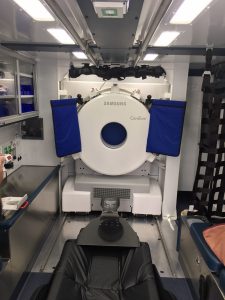
An on-board CT scanner, used to diagnose stroke, differentiates a mobile stroke unit from a typical ambulance.
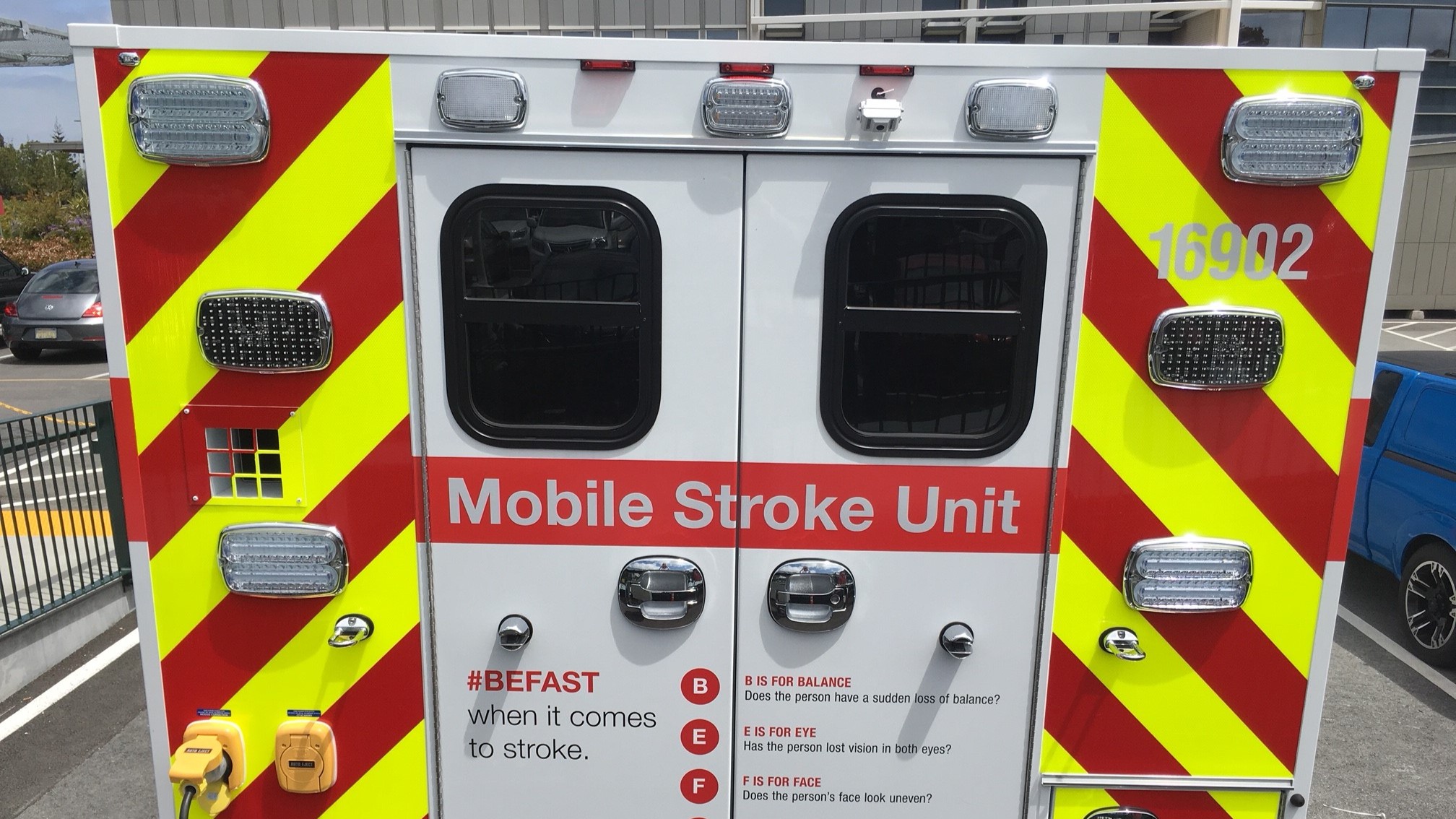
Using Sutter’s Mobile Stroke Unit, a specialized ambulance equipped with a CT scanner and staffed by stroke experts, care teams can diagnose patients in real time, determine eligibility for the study and begin treatment before patients even reach the hospital.
“When it comes to hemorrhagic stroke, time lost is brain lost,” says Dr. Ilana Spokoyny, vascular neurologist at Sutter West Bay Medical Group and medical director of Mobile Stroke Unit and principal investigator for the FASTEST clinical trial at Sutter. “The earlier we can identify a hemorrhagic stroke and intervene, the greater our chance of improving outcomes for patients and preventing lifelong disability.”
The Race Against Time Starts Before the Emergency Room
The FASTEST trial is an international study examining whether an investigational medication designed to help the body form clots more quickly can improve outcomes for patients experiencing hemorrhagic stroke.
That timing is critical because most stroke progression and damage happens within the first few hours after a stroke.
Hemorrhagic strokes account for about 15% of all strokes but nearly half of all stroke-related deaths.
Unlike more common acute ischemic strokes, which are caused by blocked blood vessels and can often be treated with clot-busting medications or minimally invasive procedures, hemorrhagic strokes happen when a blood vessel ruptures and causes pressure and damage within the brain.
Sutter’s Mobile Stroke Unit was designed to shrink that timeline. Instead of waiting until a patient arrives at the emergency department, stroke specialists can perform brain scans in the field and begin making treatment decisions immediately.
“The Mobile Stroke Unit gives us access to patients much earlier than traditional emergency care pathways often allow,” says Dr. Spokoyny.
That speed has helped position Sutter as one of the top-enrolling Mobile Stroke Unit sites currently participating in the ongoing FASTEST trial.
Opening New Doors for Patients
 Clinical trials are how doctors discover new therapies, improve survival rates and expand treatment options for future patients.
For people facing serious illnesses like stroke, they can also offer access to promising treatments years before they become widely available.
“This is a disease with enormous consequences, high mortality, severe disability and lives changed in an instant,” says Dr. Spokoyny. “Clinical trials are how we move care forward.”
FASTEST is part of a growing wave of stroke research happening across Sutter Health and its Advanced Neuroscience Service Line, work aimed at changing what’s possible for patients during some of the most critical moments of their lives.
“Clinical trials are how today’s research becomes tomorrow’s standard of care,” says Dr. Nobl Barazangi, section chief of stroke for Sutter Neuroscience Service Line and medical director for stroke and neurocritical care research for the Bay Area Stroke program with Sutter West Bay Medical Group. “Studies like FASTEST are helping us better understand how earlier intervention can improve outcomes for patients facing some of the most devastating neurological emergencies. Through our stroke network and Mobile Stroke Unit program, we’re working to bring innovative research and potential new treatment options to patients faster than ever before.”
Learn more about research and clinical trials at Sutter Health that are informing clinically distinct neurologic care.