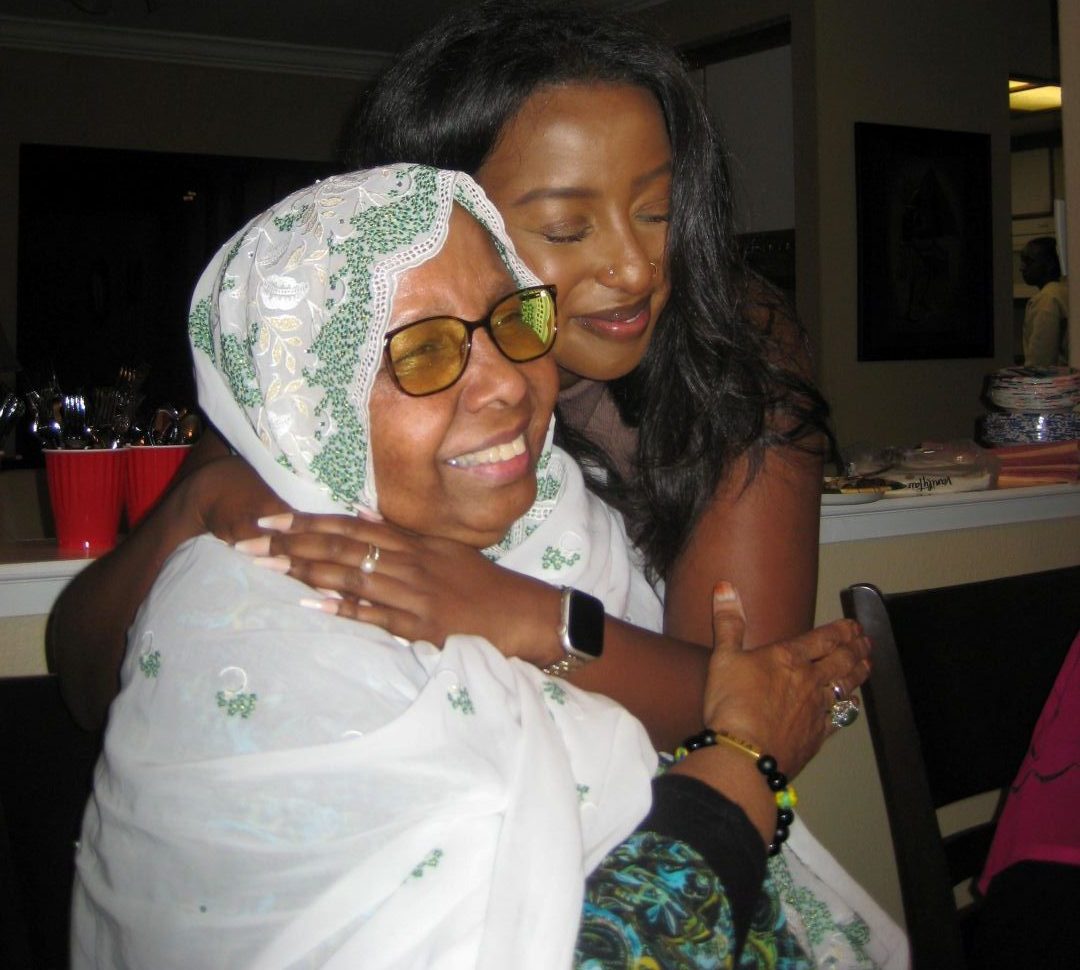
When Warsan Ali’s aunt was diagnosed with an aggressive form of brain cancer, Ali found herself doing more than translating medical terms. She was helping her Somali immigrant family make sense of fear, prognosis and treatment, while seeing firsthand how trust can shape the care people receive.
That moment reinforced what Ali had long understood: Medicine is not just about diagnosis and treatment, but about explaining, supporting and bridging gaps for patients and families who may feel unfamiliar with the health care system. Now a first-generation American from Berkeley who was raised in Sacramento, Ali is beginning her medical education at Charles R. Drew University of Medicine and Science with support from a Sutter Health scholarship that is helping make her dream a reality.
Growing up, Ali often served as a bridge between her family and the healthcare system.
“Coming from a refugee family household where English is not their first language, understanding not just the language, but the customs of this country can be very difficult and literally be a barrier to healthcare,” she said. “For my family, a lot of them would either defer or just not go to the doctor because they didn’t feel understood, seen or heard.”
As the oldest daughter in her family, Ali naturally stepped into the role of advocate and communicator.
“I sort of naturally became the one who would help my family navigate things they didn’t have the language for,” she said. “I learned how to translate confusion into clarity and encourage my family to be empowered to seek care.”
Inspired by her experiences, Ali attended the University of California, Santa Barbara, where she studied biopsychology and minored in poverty, inequality and social justice. During college, she founded the university’s first public health organization and conducted research exploring the intersection of health, culture and community.
After graduation, she continued building clinical and research experience through positions at UC Davis Health and Stanford University School of Medicine, where she worked on pediatric autism research and developed a deeper appreciation for the role physicians play in patient care and broader systems change.
Her commitment to medicine grew stronger when her aunt was diagnosed with glioblastoma, an aggressive form of brain cancer.
“I had to explain to my family what the diagnosis meant, what the prognosis meant and why treatment was so important,” she said. “There’s a saying in Somali: “Nin buuka boqol uu tali” which means, “A sick man receives thousands of others’ advice.” In our culture, we heavily rely on our community to inform how we move forward through struggle. But fear and unfamiliarity with the healthcare system can get in the way of the care we need. This moment in my life showed me how important the role of the physician is in explaining, supporting, and expanding access to establish trust in medicine.”
The experience reaffirmed the type of physician she hopes to become.
“I want people to feel listened to, seen and believed,” Ali said. “I want to be the kind of provider who makes patients feel like this is a collaborative effort. Who approaches them with empathy, consideration of how their culture, faith and identities shape their experience of illness and care, and help ensure my patients feel safe and taken care of.”
When it came time to apply to medical school, Charles R. Drew University of Medicine and Science stood out because of its mission and prepare physician leaders committed to bridging access gaps where they exist.
“The school’s mission really aligns with mine,” Ali said. “Their curriculum acknowledges that social justice and the practice of medicine are deeply connected, and that’s exactly the kind of physician I want to become.”
While receiving her acceptance to medical school was a milestone, Ali said learning she had been selected for a Sutter Health scholarship was equally life-changing.
“The moment I got the email that I received the Sutter scholarship is something I’ll never forget,” she said. “This changed my life and will change the trajectory of the impact I’ll be able to have.”
The scholarship provides critical financial support, allowing Ali to focus on serving the communities she cares about most rather than the burden of overwhelming student debt.
“I won’t feel this burden of, ‘how can I have the career and work in the communities that I want to with so much debt?’” she said. “I’m so honored and humbled to have been selected for this award, and I really do believe it will allow me to become the physician and have the impact that I want to have.”
Program Growth Paves Way for a Bright Future
The Sutter Health Scholars Program, in partnership with CDU, launched in 2024 with a $7.5 million investment. Last year, Sutter increased the number of full scholarships from 25 to 50 over five years. This makes the Sutter Scholars Program one of the largest scholarship efforts in CDU’s history and a first-of-its-kind initiative for Sutter.
Students part of the scholars program will get more than just financial help and a debt-free education. They will be matched with mentors at the top of their medical and research specialties, placed in unique clinical settings and given access to the tools needed to succeed in medical school and thereafter.
Ali remains committed to the values that have guided her journey from the start: service, advocacy and making sure every patient feels heard.
“I hope to receive intentional medical training to become the best physician I can for the communities that need us most,” she said. “I want to pour into the community as much as Charles R. Drew University and Sutter Health are pouring into me.”
Supporting a Medical Workforce to Close Care Gaps
CDU is one of just four Historically Black Institutions in the U.S. with a medical school, and the only one west of Texas. The school has a long track record of training doctors who return to serve in places with limited access to care. The Sutter-CDU partnership is helping strengthen that mission.
With 30 residency and fellowship programs comprising family medicine and many specialties, and many more Graduate Medical Education, or GME, programs planned, Sutter is on pace to become Northern California’s largest community-based healthcare training system.
By the end of 2027, Sutter expects to train approximately 575 residents and fellows across 39 accredited programs. The Mark & Mary Stevens School of Medicine establishes the first new medical school in California’s San Francisco Bay Area in more than a century.
See the full list of this year’s CDU scholars here.