

Sutter’s CPMC in San Francisco, part of Sutter Health, has performed its 500th robotic bronchoscopy since launching the technology in 2023, as doctors see a changing population of patients being evaluated for lung cancer.
For decades, lung cancer was closely associated with older adults who smoked. But doctors are increasingly evaluating younger patients, women and people who have never smoked after finding suspicious spots on lung scans.
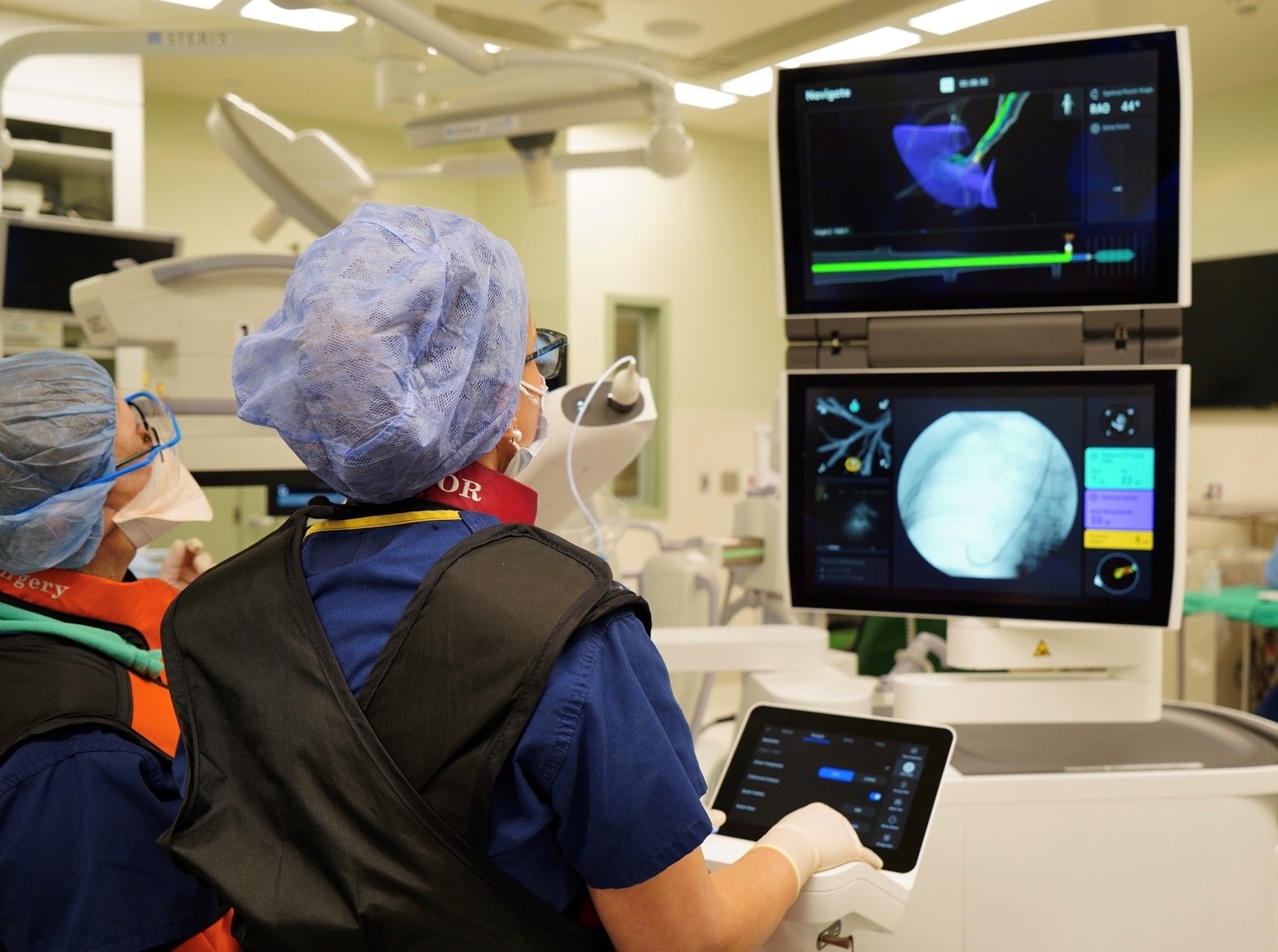
Dr. Heba Ismail works the controls of the Ion robot by Intuitive.
“Lung cancer is not always the disease people think it is,” said Dr. Heba Ismail, director of Interventional Pulmonology at CPMC. “We are seeing patients who don’t fit the traditional picture, and we need to be able to evaluate these findings accurately and with as little burden to the patient as possible.”
Robotic bronchoscopy uses advanced tools to reach small or hard-to-access areas of the lungs and take tissue samples for testing. At CPMC, it can also be part of the Assisted Single Anesthetic Procedure, or ASAP, model, which allows doctors in some cases to biopsy a lung nodule, determine whether it is cancer and proceed with surgery during the same anesthetic event.
The approach brings pulmonologists, radiologists, thoracic surgeons, oncologists and pathologists together around the patient, helping streamline the path from an abnormal scan to a diagnosis and treatment plan.
For Dr. Ismail, the next challenge is continuing to recognize lung cancer in people who may not consider themselves at risk.
“The most important thing we can do as physicians is help people understand their risk and get screened when they’re eligible,” she said. “Our goal is to keep finding better and faster ways to detect lung cancers earlier so patients can move quickly to get the care they need.”
How Common Is Lung Cancer?
Lung cancer (both small cell and non-small cell) is the second most common cancer in both men and women in the U.S., not counting skin cancer.
The number of new lung cancer cases continues to decrease overall, partly because more people are quitting smoking (or not starting).
Learn more about lung and thoracic cancer services at Sutter Health here.

(L to R) Dr. Jey K. Chung, Dr. George S. Horng, Dr. Peter Anastassiou, Dr. Heba Ismail