Roseville woman becomes Sutter’s first patient to receive a cochlear implant while awake
Maritha de Werk wants to have conversations with her son again. She wants to stay for the entire birthday party. She wants to hear and talk with her neighbors.
Most of all, the 83-year-old Roseville resident wants to be an active participant in her own life.
As her hearing declined over the past 20 years, those everyday moments became increasingly difficult.
“It would take so much effort to listen. It was tiring,” she said. “I would go to a birthday party and leave right after dinner because I wasn’t comfortable. There were conversations happening all around me that I couldn’t participate in.
“At 83 years old, I live alone and I already feel left out. Feeling left out is the worst.”
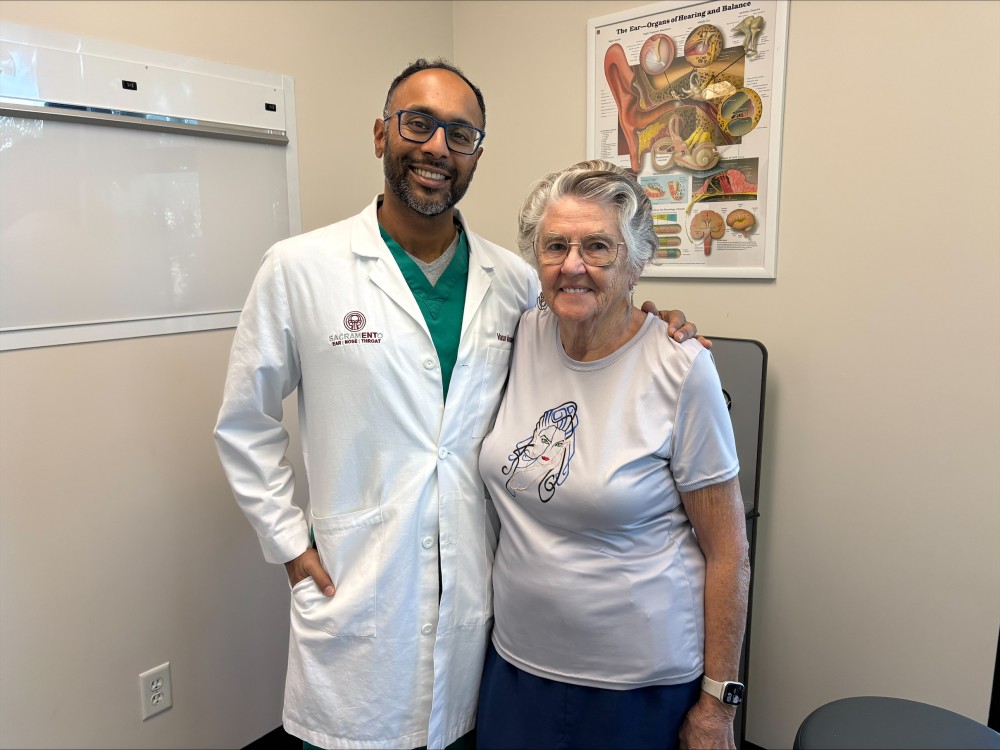
De Werk, who has worn hearing aids for 23 years, recently became the first Sutter Health patient to receive a cochlear implant while awake. Dr. Varun Varadarajan performed the procedure at Fort Sutter Surgery Center in Sacramento.
At a hearing appointment earlier this year, de Werk learned her left hearing aid could no longer adequately address her hearing loss. A cochlear implant offered another option.
Unlike hearing aids, which amplify sound, cochlear implants bypass damaged portions of the ear and send signals directly to the auditory nerve.
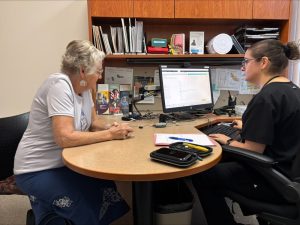
Maritha de Werk discusses her cochlear implants with audiologist Briana Hester.
But de Werk was nervous about another surgery, particularly the prospect of general anesthesia.
“I have had a lot of surgeries over the years, so I really didn’t want to have anesthesia,” she said.
After researching cochlear implants and connecting with an online support group, de Werk still had questions.
“I thought, ‘Shouldn’t I be deaf before I have surgery?’ They told me it’s better to have the surgery before you have complete hearing loss.”
Then de Werk found Dr. Varadarajan, who had experience performing cochlear implant surgery on patients who remain awake. Instead of general anesthesia, de Werk received local anesthesia to numb the surgical area.
“Two days before the surgery, I was not nervous, and the day of, not nervous,” she said. “I knew he was the best and that he enjoys his work. He is a likable guy.”
The procedure took about 40 minutes, and de Werk went home within an hour after surgery.
“When we determined that she was a candidate for cochlear implant surgery, she expressed a reluctance to undergo general anesthesia,” Dr. Varadarajan said. “Because of her concerns, I offered to perform the surgery while she was awake.”
Dr. Varadarajan assembled a specialized team at Fort Sutter Surgery Center to offer awake cochlear implantation.
Two and a half weeks later, de Werk returned to audiologist Briana Hester to have her implant activated.
She sat eagerly as Hester adjusted the volume to a comfortable level and reviewed how to use the equipment. Then came the moment de Werk had been waiting for.
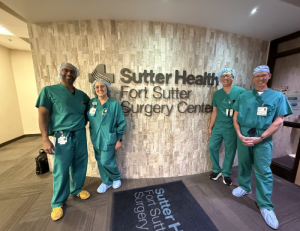
Maritha de Werk’s surgical team at Fort Sutter Surgery Center in Sacramento.
She removed the hearing aid from her right ear and listened. She could still hear through her newly activated cochlear implant on the left.
“Her brain will adjust to electric stimulation over time and learn to interpret the sounds as speech,” Hester said. “This may take up to four to six months but can be achieved with consistent use of the external processor and listening therapy.”
For de Werk, success is less about the technology than what it might allow her to do.
She hopes to have easier conversations with the people around her and eventually travel again without needing a companion.
“I want to live to be 100, and in order to do that, I need to be active,” she said. “I need to get information and talk to people. I need to stay alert.”
That starts with being part of the conversation again.