
Behind every cancer diagnosis is a patient and loved ones hoping for answers. With decades of experience in cancer care and research, Dr. Kevin Kim, newly appointed as chief of precision medicine at Sutter Health, explains how the integrated health system is advancing precision oncology by using genetic insights to guide treatment choices. He also shares how this work is expanding access to clinical trials, strengthening comprehensive cancer care across Northern California.
In this Q&A, he shares how a more connected, data‑driven approach gives physicians clearer information to deliver the right treatment for the right patient, at the right time.
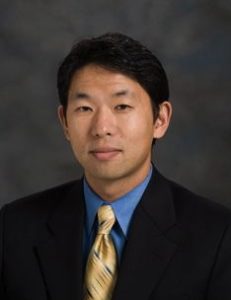
Kevin Kim, M.D.
Q: What is precision medicine?
A: Precision medicine is an approach to health care that uses information about a person’s individual biology, such as their genes, to help guide medical decisions, rather than relying on a one-size-fits-all approach.
In cancer care, this approach is called precision oncology. It uses detailed information about a tumor’s biology to help physicians select treatments that are most likely to work for a specific patient. This may include genomic testing, which identifies gene changes within a tumor, as well as biomarkers — measurable signs of a cancer, such as gene changes or proteins, that help physicians understand how a cancer may behave or which treatments are most likely to work.
For patients, precision oncology means care tailored to the specific biology of their cancer, enabling physicians to select more effective treatments, avoid unnecessary toxicity and, in some cases, offer access to clinical trials.
Q: Precision oncology has been evolving for years. What makes this the right moment for Sutter to elevate it now?
A: Precision oncology has reached a point where doctors can routinely use advanced genetic testing to better understand a person’s cancer and choose treatments that are more likely to work. New technology now makes it easier to analyze this information quickly and use it consistently across care teams. This means more patients can benefit from personalized treatment options, including access to clinical trials when appropriate. Acting now helps Sutter deliver more precise, effective cancer care today, rather than years down the road.
Q: What might the future of precision oncology look like?
A: In the future, precision oncology will mean that every patient’s cancer care is guided by the unique biology of their tumor. Test results will be easier for care teams to use, helping doctors choose treatments with greater confidence and speed. Patients may also have clearer opportunities to join clinical trials when they’re a good fit. Overall, cancer care will feel more personalized, connected and focused on achieving the best possible outcomes.
Q: How might precision oncology fundamentally change how cancer treatment decisions are made?
A: Precision oncology shifts treatment decisions from a one-size-fits-all approach based on tumor type and stage to a biology-driven, personalized strategy guided by specific genomic alterations, or change to a tumor’s DNA. Instead of relying primarily on standard protocols for all patients with the same cancer type, clinicians use molecular data to select targeted therapies, immunotherapies or clinical trials tailored to the individual patient. This leads to more effective treatments, reduced toxicity, and more informed, data-driven decision-making compared to traditional cancer care.
For more information about Sutter’s advanced cancer services, visit www.sutterhealth.org/services/cancer.