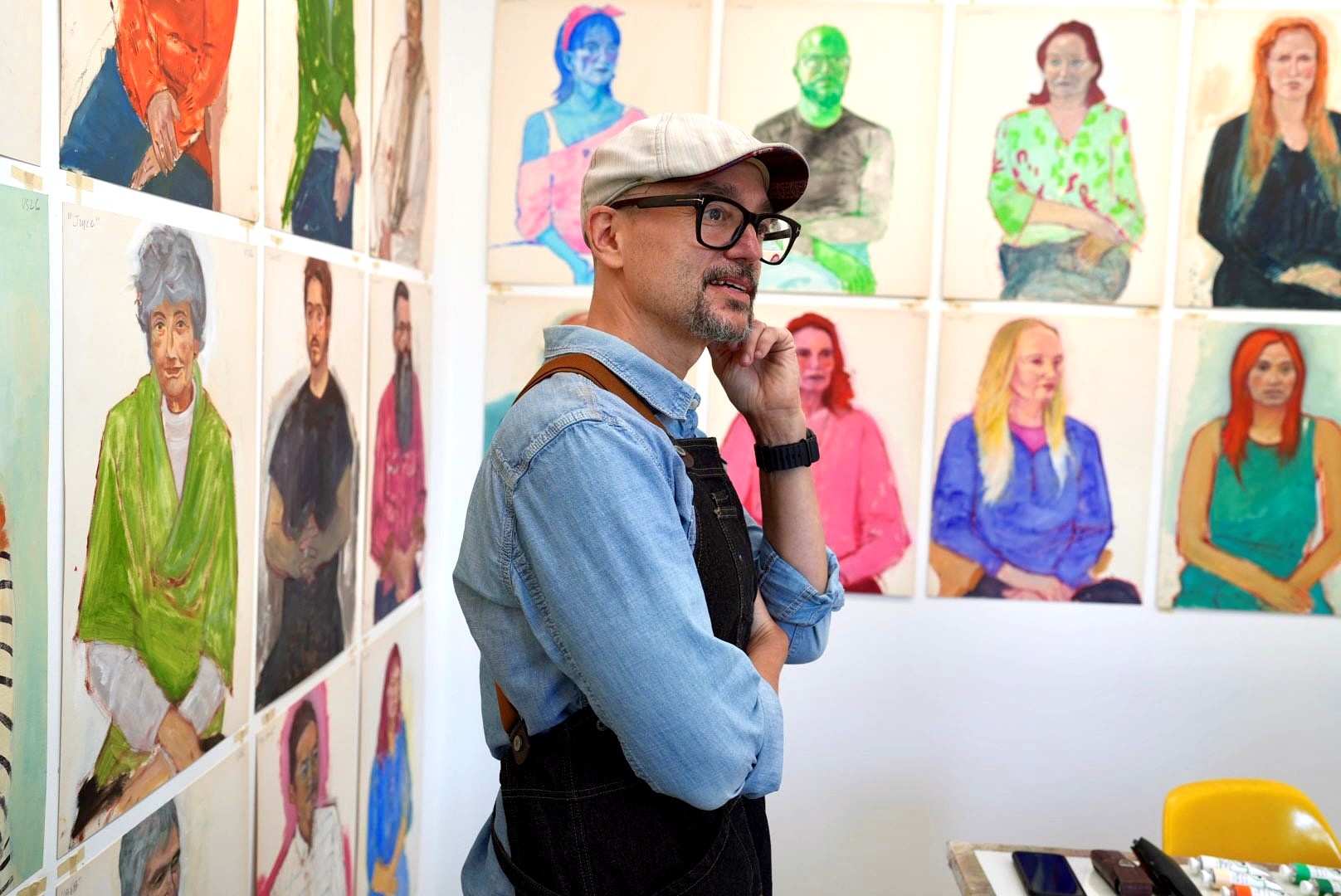
Vincent Serritella, 50 – an artist, filmmaker, engineer and former Pixar animator – woke on Dec. 5 to flashing bursts of light in the far left edge of his vision.
He assumed it was fatigue.
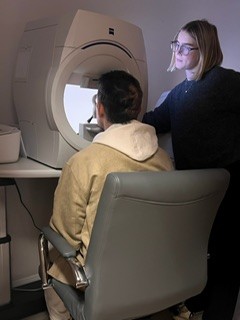
Vincent with the neuro-ophthalmologist.
“I just thought I was working too much and needed a weekend to reset,” he said.
By the time he sat down at his computer, something was clearly wrong. He couldn’t see his left hand.
He called his optometrist, who saw him right away. During the exam, she suspected something more serious and referred him to a neuro-ophthalmologist.
There, concern escalated quickly. He might be having a stroke.
Hours later, he was in the emergency room at Sutter’s CPMC in San Francisco.
A Life-Changing Diagnosis
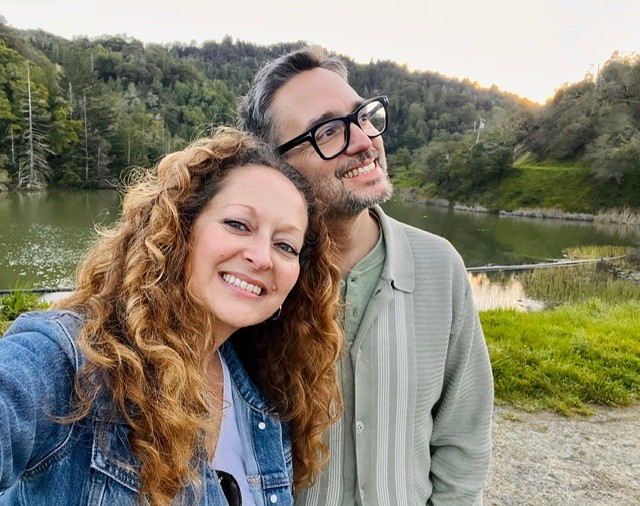
Marissa Serritella and Vincent Serritella
What followed was a rapid sequence of scans and consultations.
Then neurosurgeon Dr. Michael Zhang delivered the diagnosis: a brain tumor pressing on Serritella’s optic nerve.
It was glioblastoma, the most aggressive form of primary brain cancer in adults.
“It was surreal,” Serritella said. “I have never been more present in my life. Everything narrowed to that room. I could see every detail. I was fully there.”
Sitting beside him was his wife, Marissa.
“I wasn’t just thinking about me,” he said. “I was watching her reaction. Trying to understand what this meant for both of us.”
A Rapid Turn Toward Surgery
Within days, Serritella was in surgery.
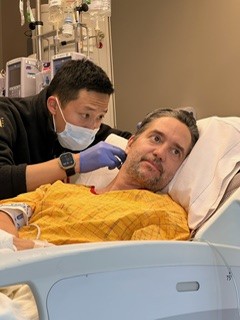
Dr. Michael Zhang examines Vincent’s post-surgical incision after brain surgery.
“I just wanted to get this thing out and move on,” he said.
The resection removed most of the tumor, but swelling obscured part of it. The next day, Dr. Zhang took him back into surgery.
The second procedure achieved full removal.
“The fact that they got me back in … that was an A-team,” Serritella said. “Most cases would have been considered resolved after the first operation. But they didn’t stop.”
ICU Care and the Long Middle
Serritella’s recovery did not move in a straight line.
A cerebrospinal fluid leak required another intervention and a lumbar drain. He spent 20 days in CPMC’s ICU, a where progress came incrementally, one step at a time.
“It wasn’t just one thing,” he said. “It was layered. But every time something came up, someone was already there to handle it.”
During those long days and nights, what stayed with Serritella was not just the medical response, but the accumulation of small gestures from his care team. He described physicians checking in outside their rounds and nurses leaving handwritten notes during their overnight shifts.
“These ICU nurses—some were traveling, rotating in and out,” he said. “But those acts of kindness completely blew my mind. They took time to get to know me, listened and encouraged me.”
Read Vincent’s story in the San Francisco Chronicle
Radiation, Chemotherapy and Routine
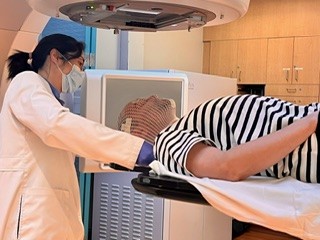
Vincent prepares for radiation.
Following the ICU, Serritella underwent several weeks of radiation and chemotherapy.
He also rebuilt his days around clean eating, mindfulness and movement, including activities like weight lifting.
“There was data behind it, but also instinct,” he said. “If I stayed active, I stayed grounded.”
At some point, he stopped waiting for life to feel normal again.
“I just woke up one morning and said, ‘This is a thing. And let’s work with it and move forward.’”
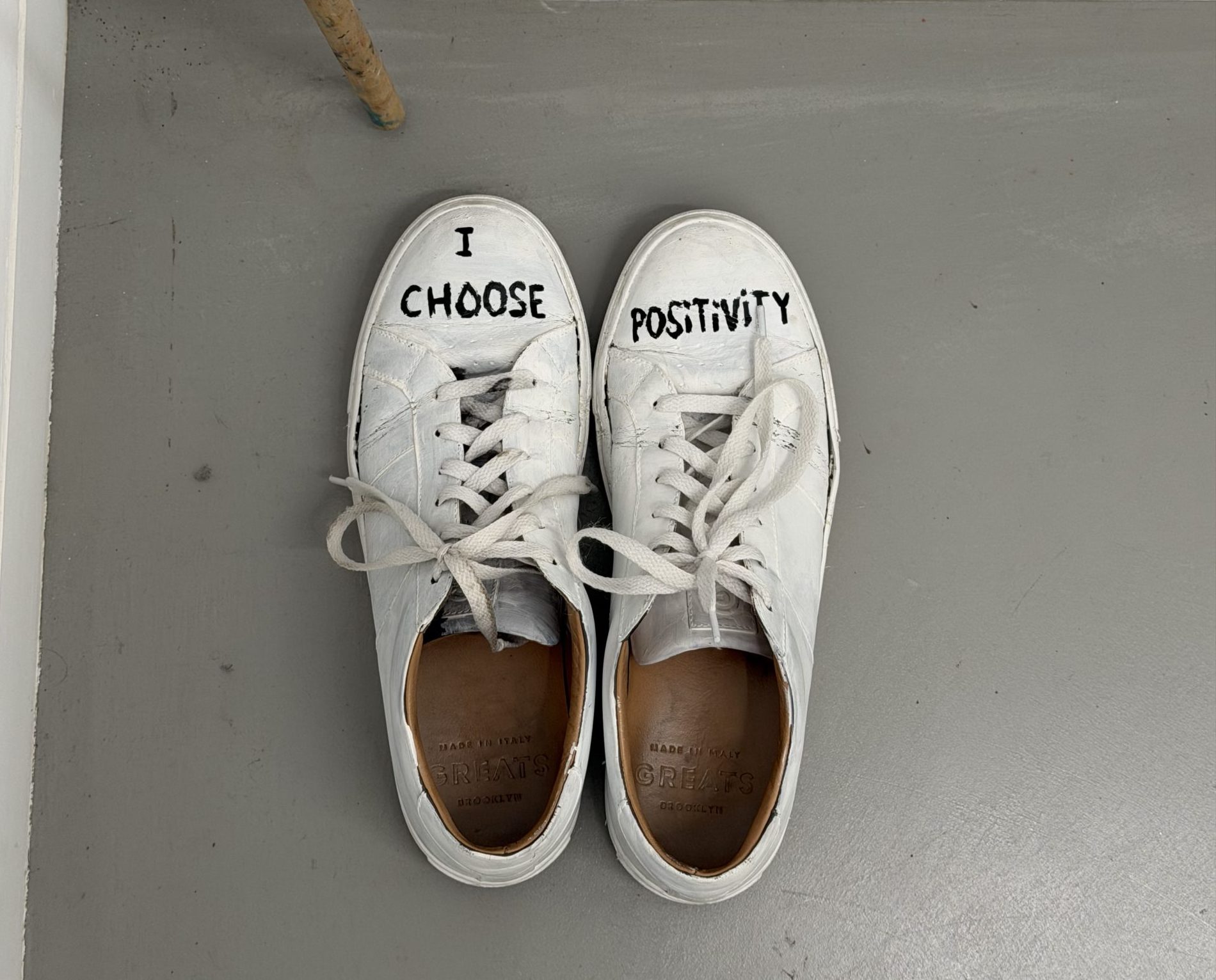
Vincent wrote “I Choose Positivity” on his shoes during treatment.
He also returned to his art studio.
The Human Infrastructure
In the weeks after treatment, Serritella began painting again. The subject was the people around him.
Caregivers. Doctors. Friends. Neighbors. People who showed up in large ways and small ones – from meals dropped off to help navigating medical bills to simply being present during periods of uncertainty.
“The only way I knew how to process this was through my art,” he said.
He calls the project The Human Infrastructure. It’s not a portrait series of individuals, but of what held him together, he explained.
He plans roughly 40 portraits and has completed 30 thus far.
Most recently, Serritella painted Dr. Sharma, along with his nurse navigator Katy Kiernan and Dr. Zhang.
Once finished, he plans to exhibit the work publicly.
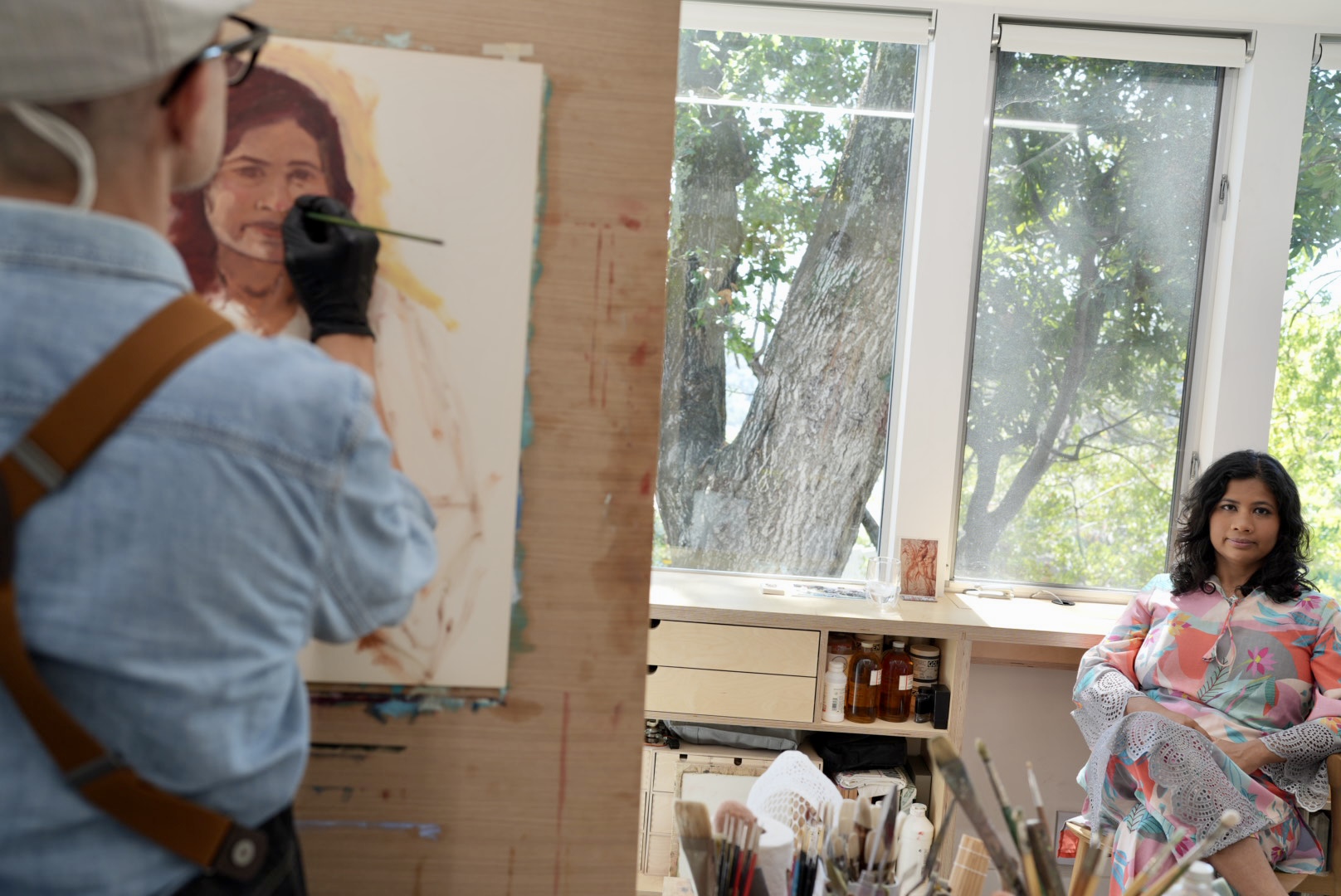
Vincent Serritella paints his neuro-oncologist Dr. Akanksha Sharma | May 30, 2026
Planning for What Comes Next
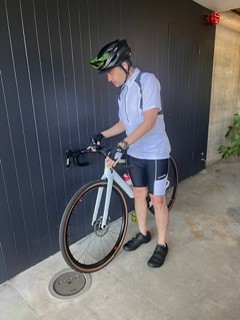
Vincent is back on the bike post treatment.
Today, Serritella continues therapy, while his care team is planning ahead.
“A future-facing mindset is essential in neuro-oncology,” said Dr. Sharma. “The question is often not if a tumor will recur, but how prepared the team is to respond when it does.”
For Serritella, that preparation has included clinical trial eligibility and participation in Sutter’s Cancer Avatar Program, which studies a patient’s own tumor tissue to help guide treatment if the cancer returns. He’s also started Optune, a wearable device that delivers tumor treating fields therapy designed to disrupt cancer cell division.
“I tell my patients, ‘Let me carry that. Let me plan for you,’ so they can focus on living their lives,” she said. “It’s not about complexity, it’s about relief.”
That philosophy shows up in how decisions are made in CPMC’s neuro-oncology program, not only around survival, but around daily life, identity and what patients are still able to hold on to.
For Sutter, that vision extends further. In 2028, the health system plans to open an advanced neurosciences complex in San Francisco that will unite specialized care and diagnostics under one roof. The facility will offer patients the same kind of seamless, multidisciplinary care that has been central to Serritella’s journey.
A Before and After Moment
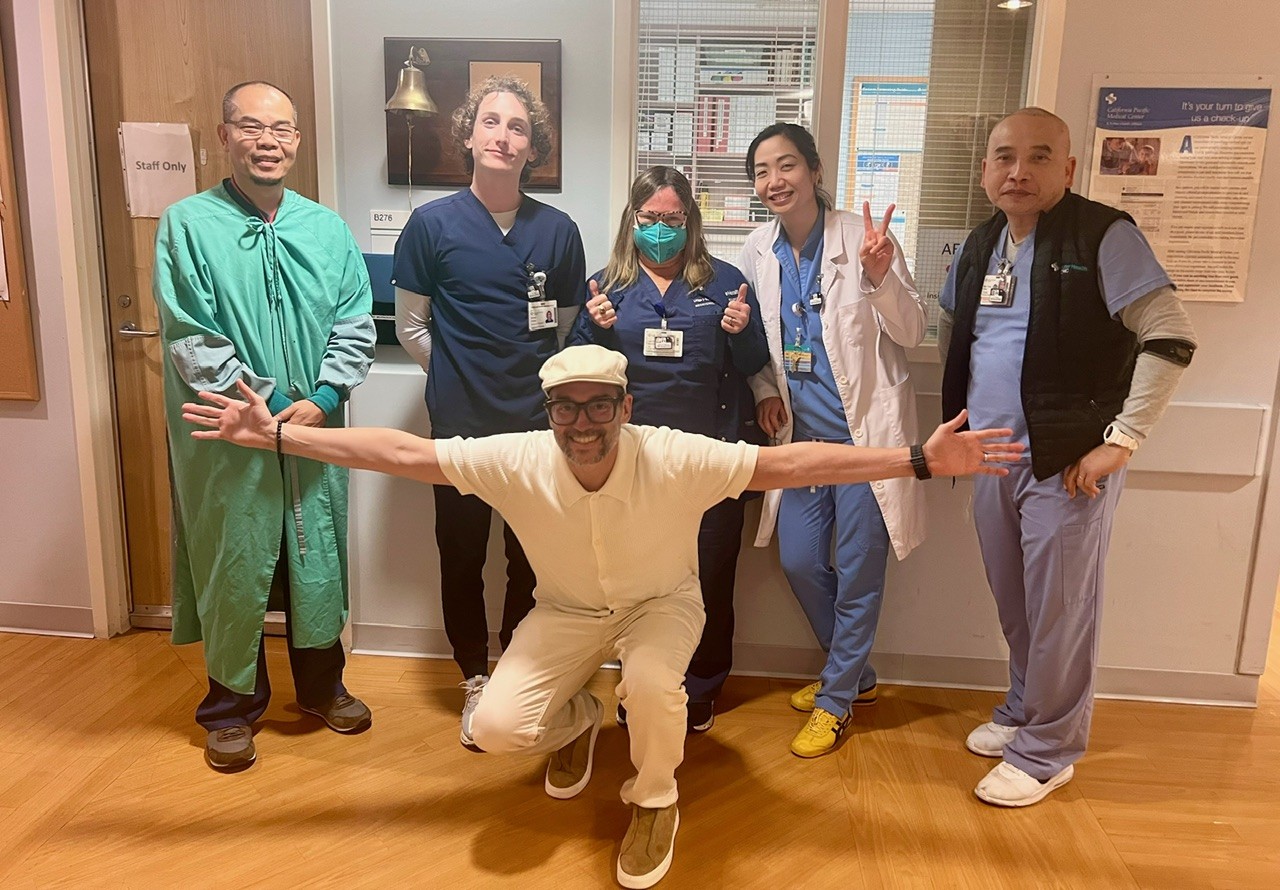
Vincent celebrates his last day of chemotherapy at Sutter CPMC’s Pacific Heights Outpatient Center
Serritella describes his recovery as something that doesn’t return you to who you were before.
“I used to think a lot about control—building systems, designing environments, solving problems,” he said. “Now I think more about what you can’t control, and how you move through it anyway and find the positive.”
Looking back, he sees a chain of moments that aligned at the right time.
“I don’t take that lightly,” he said. “It felt like every step, the right people were there. I’m so grateful.”
Moving Forward
Serritella continues to rebuild strength and endurance, returning to cycling alongside his art.
He also continues follow-up imaging and care. His most recent MRI showed no signs of active disease.
“There’s nothing fun about glioblastoma,” he said. “I just want someone else to feel a little less alone in it.”
Through The Human Infrastructure, Serritella’s beginning to do just that – translating an experience few can understand into something others can see, feel and, perhaps, find themselves in.
Watch Vincent reveal his portrait of Dr. Sharma:
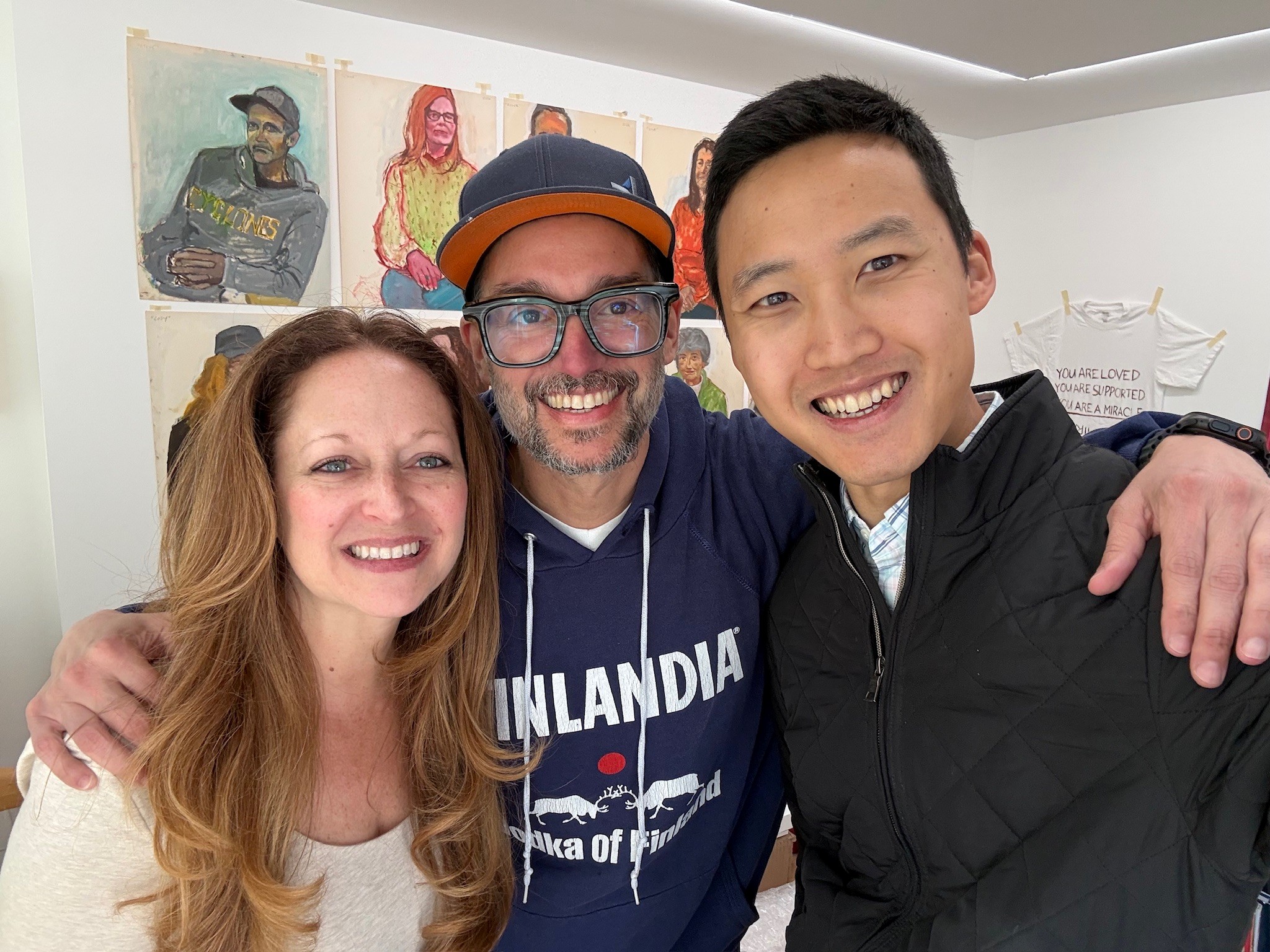
Marissa Serritella, Vincent and Dr. Michael Zhang
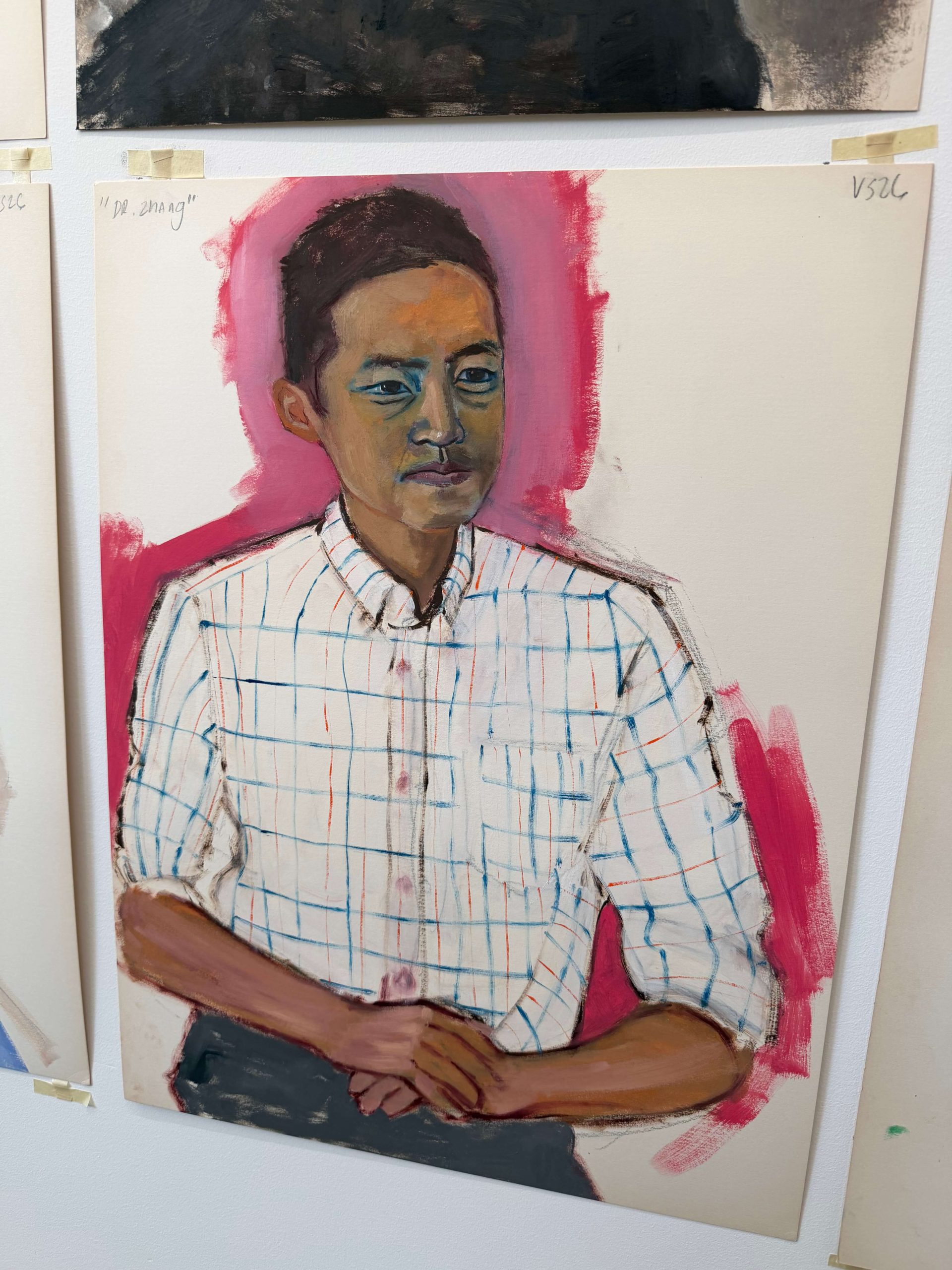
Vincent’s portrait of his neurosurgeon, Dr. Michael Zhang
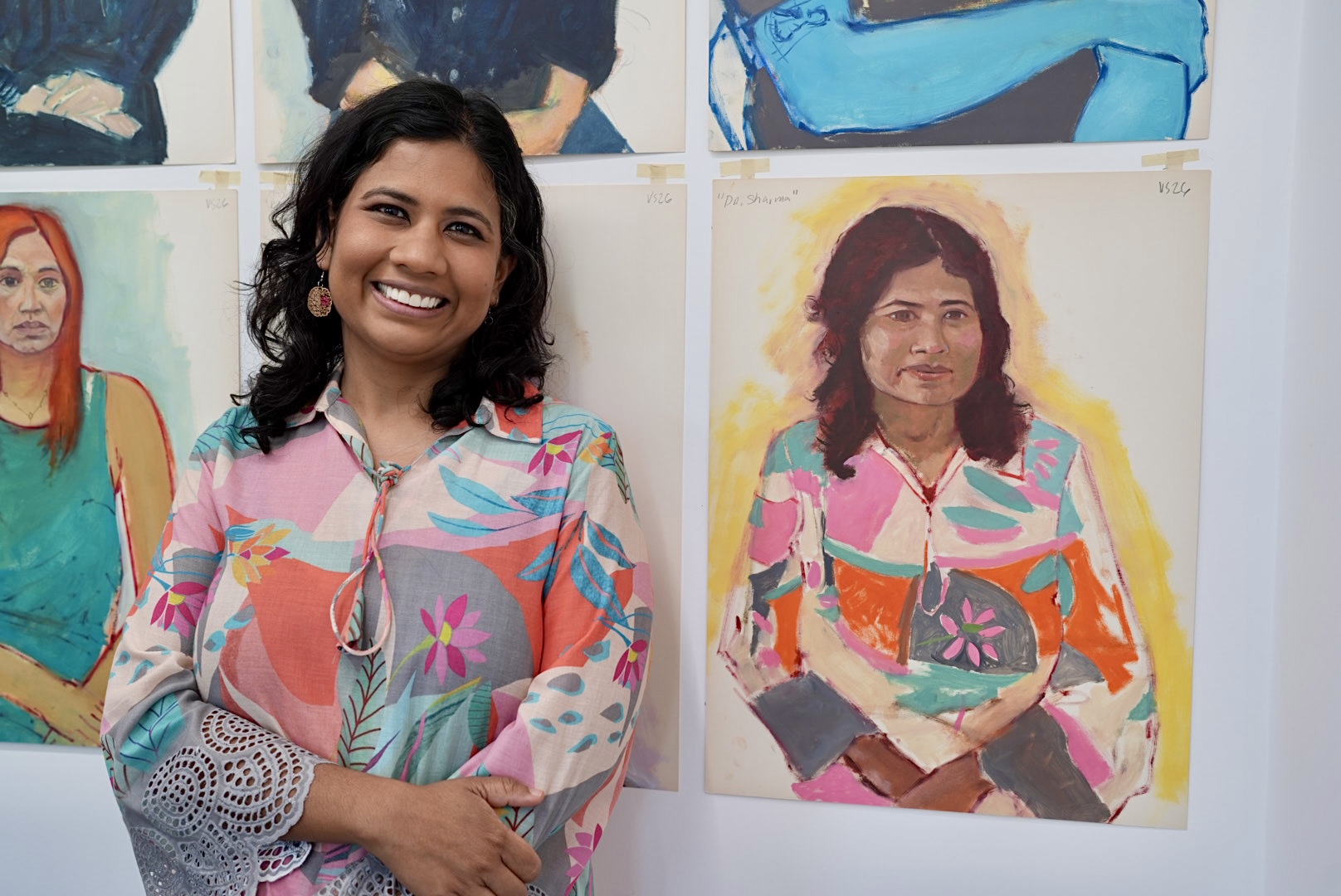
Dr. Akanksha Sharma stands next to her portrait painted by Vincent Serritella
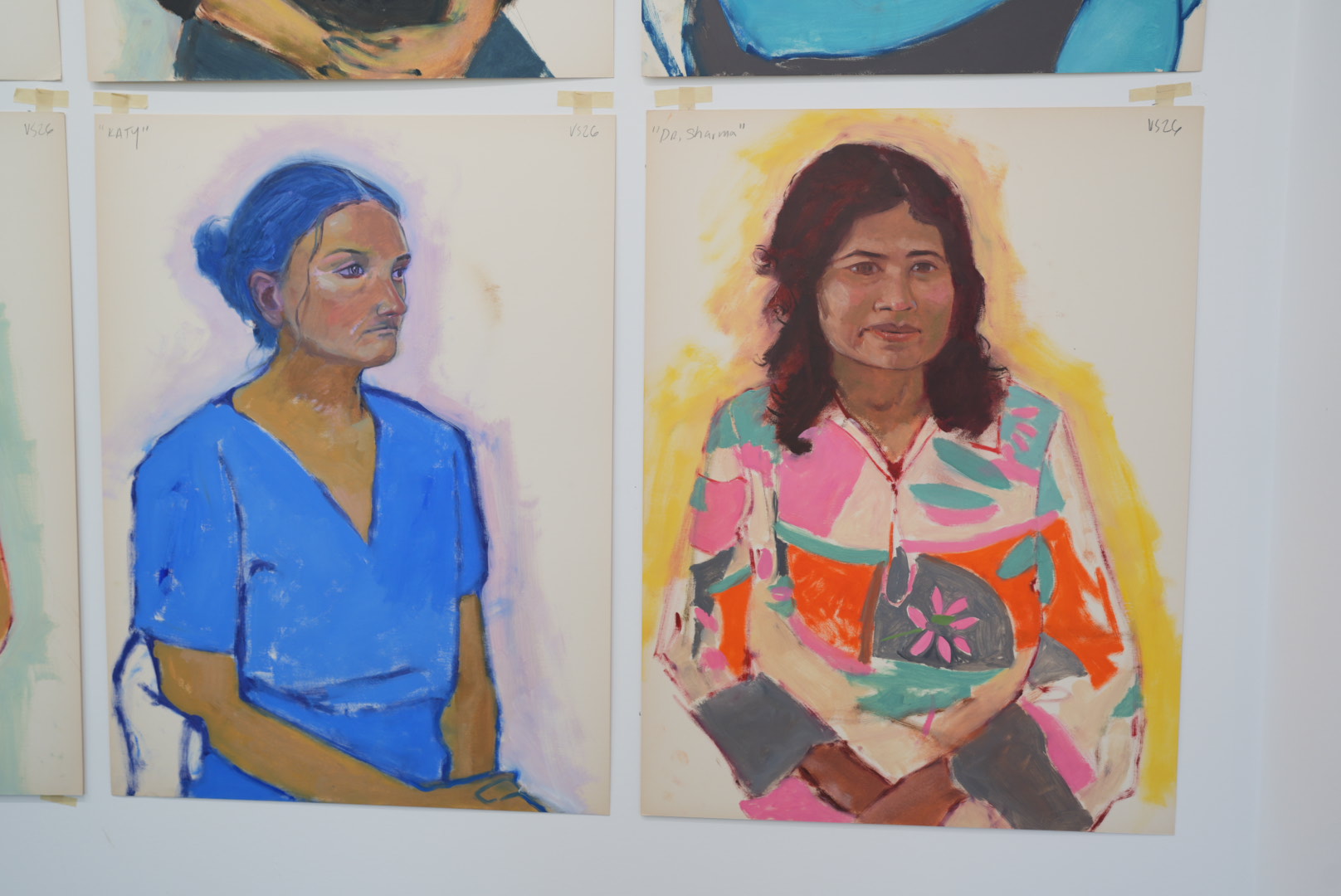
In Vincent’s San Rafael studio, portraits of nurse navigator Katy Kiernan and Dr. Sharma hang side by side.
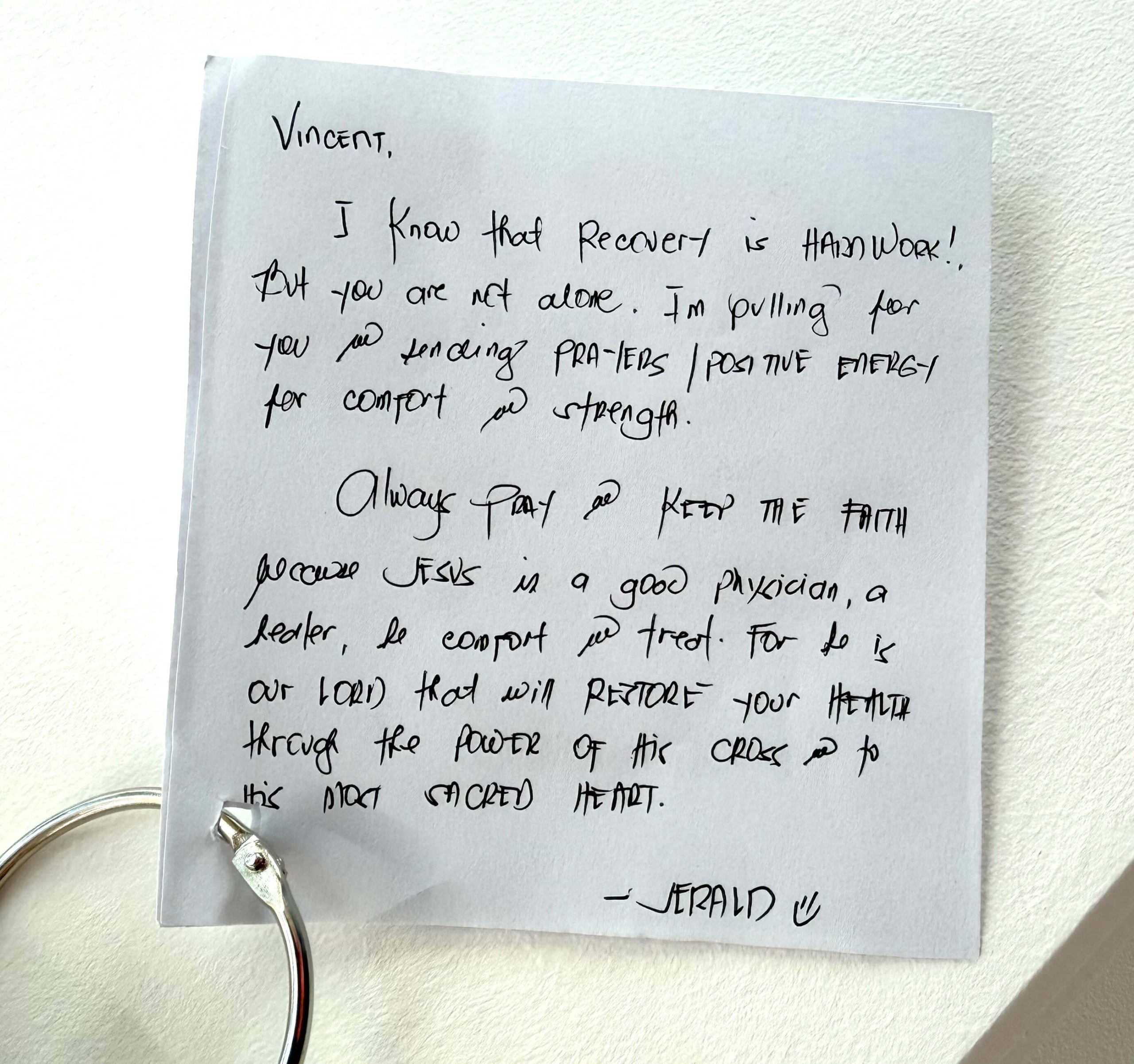
A note of encouragement from one of Vincent’s Sutter CPMC ICU nurses, Nurse Jerold