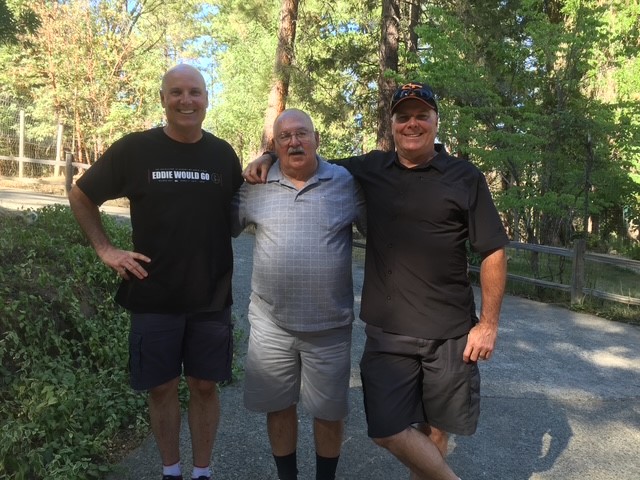
For twin brothers Jon and David Swaney, life had always moved in parallel. Raised together on the rural outskirts of Roseville, California, the two shared nearly everything: childhood adventures, careers in public service and a close family bond that endured into adulthood. What they never expected to share was the same cancer diagnosis less than two years apart.
Their journeys through prostate cancer strengthened that bond and reshaped how they viewed health care, advocacy and informed decision-making.
For most of his life, Jon rarely thought about his health. A former Air Force serviceman who later spent years working as a correctional officer, he approached life with discipline and resilience. So, when he began experiencing frequent urination, fatigue and interrupted sleep, he dismissed the symptoms as normal signs of aging.
“I just thought, this is what getting older feels like,” Jon recalled.
Everything changed during a routine medical visit after high blood pressure was discovered at a dental appointment. Having recently moved his care to Sutter Health, Jon met a physician who took a broader, more proactive approach. Along with addressing his blood pressure, the doctor ordered comprehensive lab work, including a prostate-specific antigen test.
The results were alarming. Follow-up testing confirmed elevated PSA levels, and a biopsy soon revealed prostate cancer.
Like many patients, Jon was overwhelmed by fear, uncertainty and an avalanche of information. At first, surgery was presented as the main treatment option. Instead of rushing into a decision, Jon researched outcomes, explored alternatives and sought second opinions.
That search eventually led him deeper into care and detailed conversations with Dr. Daniel Schiffner with the Palo Alto Foundation Medical Group (PAFMG), that transformed his outlook. For the first time since his diagnosis, Jon felt clarity.
“That conversation changed everything for me,” he said.
Through those discussions, Jon gained confidence in modern radiation therapies and ultimately chose radiation treatment through Sutter Health’s network. The experience, from scheduling to treatment delivery, left a lasting impression.

“It felt organized, compassionate and personal,” Jon said. “Every person along the way made me feel like they truly cared.”
Today, his PSA level remains low, and his prognosis is strong. Jon’s experience soon would have an even greater impact, much closer to home.
About a year and a half later, his twin brother, David, began experiencing recurring urinary tract infections. Healthy most of his life, David did not suspect prostate cancer at first. But Jon’s diagnosis changed his perspective.
After multiple tests ruled out other conditions, David pushed for a prostate biopsy, specifically citing his brother’s history. The results came back positive.
This time, however, the journey looked very different.
Because Jon had already navigated the uncertainty, David entered the process with something many cancer patients do not have: a roadmap.
“He was very adamant,” David said. “He told me what to expect, what to look for and where to go.”
Jon guided his brother through treatment options, encouraged him to ask questions and connected him with the same specialists who had helped him. When delays and frustrations surfaced with another health care provider, Jon encouraged David to pursue care through Sutter Health using his veteran community care benefits.
From the beginning, David said the experience felt different.
“I couldn’t believe how positive it was,” David said. “Every step of the way, every person I dealt with, it felt like they truly cared.”
Much of what David’s care team explained mirrored what Jon had already shared with him, reinforcing his confidence and easing his fears. David ultimately underwent a short course of radiation therapy consisting of five treatments over two and a half weeks.
“For someone going through this without support, it can feel overwhelming,” David said. “But I had my brother.”
Today, both brothers are doing well and embracing life with renewed gratitude. Their shared experience changed how they view health care and reinforced the importance of advocacy, second opinions and informed decision-making.
For Jon, one lesson stands above all others.
“Do your research,” he said. “You’ve got options. Make sure you understand them before you decide.”